

2026 Best Color Coated Steel Sandwich Panel Suppliers

The 2026 construction market is demanding faster installation, lower energy use, and more dependable building envelopes. Color-Coated Steel Sandwich Panel systems answer these needs when their materials are properly selected and tested. However, product quality varies sharply among suppliers.

The World Steel Association reported global crude steel production of approximately 1.89 billion tonnes in 2023. This scale supports broad steel availability, but it does not guarantee consistent coating quality or panel performance. The International Energy Agency continues to identify buildings as a major source of global energy demand, strengthening the case for efficient insulation systems. Market reports from Grand View Research also indicate continued growth in insulated metal panel applications, particularly across industrial, commercial, and cold-storage projects.

Supplier evaluation therefore requires more than comparing prices. Buyers should examine coating thickness, steel grade, insulation core, thermal conductivity, fire-test evidence, dimensional accuracy, and production traceability. A reliable manufacturer should provide technical datasheets, verified test results, clear warranty terms, and installation guidance. Factory experience matters, especially when panels must perform under humidity, wind, temperature changes, or corrosive environments.

The cheapest quotation can be misleading. It may exclude accessories, transport, testing, or replacement risk. Even published market forecasts deserve careful reading because regional demand and reporting methods differ. This guide reviews leading 2026 suppliers through practical evidence, product capability, certifications, delivery performance, and customer support. No ranking is perfect. That is worth remembering. Real project conditions often reveal differences that brochures hide.
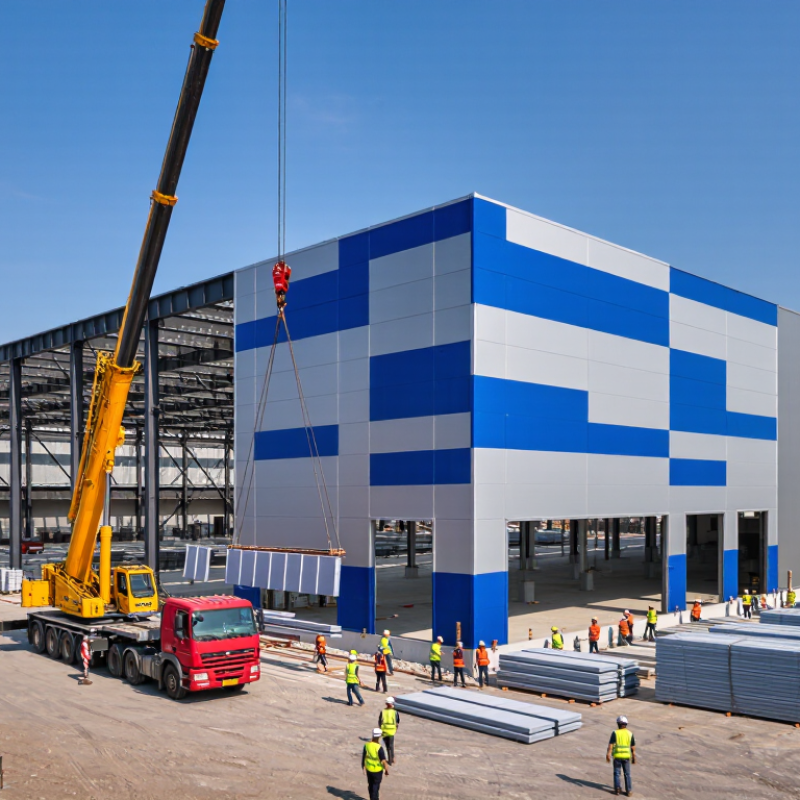
2026 Best Color Coated Steel Sandwich Panel Suppliers

What Are Color Coated Steel Sandwich Panels?

Color coated steel sandwich panels are factory-made building panels with a steel skin, insulation core, and protective steel back. The core may contain PIR, polyurethane, mineral wool, or another engineered material. Each layer serves a purpose. The steel faces resist weather and impact, while the core reduces heat transfer and noise.

In practical site inspections, panel quality depends on more than appearance. Check coating thickness, joint accuracy, core density, and edge sealing. A poorly sealed joint can admit rain and reduce insulation performance.

Panels with mineral wool may offer stronger fire resistance, while foam cores often provide lighter weight and efficient thermal control. However, published test data should support every safety claim. Color can also fade under strong sunlight, so local exposure matters. I would not choose a panel from photographs alone.

Tips: Ask suppliers for technical datasheets, fire-test reports, thermal values, and warranty terms. Compare the declared values with your project’s climate and building requirements. Inspect sample edges for gaps, crushed insulation, or uneven coating. Small defects become expensive later. Supplier reliability also includes packaging, delivery control, installation guidance, and responsive after-sales support. A low price may hide thinner steel or weaker joints. Some specifications are easy to misunderstand, especially when units differ. Verify them with an independent engineer when the building has demanding safety needs.

Key Factors for Evaluating Sandwich Panel Suppliers in 2026

The best color coated steel sandwich panel suppliers in 2026 should be judged beyond price. Material consistency matters more than attractive quotations. Ask for technical data covering core density, thermal conductivity, coating thickness, and panel tolerances. Samples reveal flaws.

A dependable supplier should provide traceable test reports and explain how panels perform in heat, moisture, wind, and fire conditions. Confirm whether production follows recognized quality systems and regional building requirements. Review warranty terms carefully, including exclusions, delivery damage, and color fading. Paperwork is not performance. Request recent project references with similar spans, climates, and installation methods.

Supplier evaluation should also include production capacity, packaging quality, and technical support after delivery. A practical check is measuring sample thickness at several points, rather than trusting one label. Clear communication about lead times can prevent expensive site delays. However, no scorecard is perfect. A supplier may pass laboratory tests yet struggle with rushed orders or inconsistent batches. Discuss corrective procedures before signing a contract. Small details, such as protected edges and readable batch numbers, often reveal operational discipline. Price still matters, but it should be compared with service life, maintenance needs, and replacement risks.

Top Global Color Coated Steel Sandwich Panel Suppliers

Top Global Color Coated Steel Sandwich Panel Suppliers

Global demand for color coated steel sandwich panels is expanding with cold storage, warehouses, and modular construction. Industry reports from Grand View Research and Mordor Intelligence project steady market growth through 2030, generally near 6% annually. These forecasts reflect energy-efficient buildings, faster installation, and stricter thermal performance requirements.

Leading suppliers should demonstrate more than attractive prices. Buyers need verified steel grades, coating thickness, core density, and thermal conductivity records. EN 14509 compliance supports confidence in panel performance across European projects. ASTM testing can provide additional evidence for fire resistance, compression, and structural behavior. The World Steel Association reported global crude steel production above 1.8 billion tonnes in recent years, showing the scale behind this supply chain.

Supply reliability matters on site. Ask for coil traceability, batch certificates, salt-spray results, and independent laboratory reports. Check whether the supplier can maintain color consistency across replacement panels. Small differences become obvious under warehouse lighting. I would also inspect packaging, edge protection, and loading methods before signing a large contract. No supplier is perfect. Some published specifications remain vague, especially for adhesive durability and real-world fire performance. That gap deserves careful questioning. A technically strong supplier combines tested materials, responsive engineering support, stable export logistics, and honest limitations.

How to Compare Panel Quality, Certifications, and Prices

Choosing a 2026 color coated steel sandwich panel supplier requires more than comparing catalog prices. Global crude steel production reached about 1.89 billion tonnes in 2023, according to World Steel Association’s World Steel in Figures 2024. Scale is impressive, but it does not prove coating consistency or panel durability. Request coil thickness, zinc or metallic coating mass, paint system, core density, thermal conductivity, and dimensional tolerances. Inspect a cut edge. Look for uneven foam, thin metal, or peeling paint.

Certifications should match the project’s risks. EN 14509 supports testing for factory-made insulated panels, including mechanical and thermal performance. ISO 9001 indicates controlled production processes, but it does not certify every panel’s fire resistance. Ask for current laboratory reports, batch traceability, and test conditions. For corrosion resistance, review ISO 9227 salt-spray results carefully. Salt-spray hours can mislead when real humidity, pollutants, and cut edges differ. This is where many comparisons become weak.

Price needs a consistent specification sheet. Compare delivered cost per square metre, not only the factory quotation. Include flashing, fasteners, packaging, freight, installation, and replacement risk. A lower price may reflect thinner steel, lower core density, or reduced coating mass. Ask whether the quoted thickness is nominal or measured. Keep samples from the approved batch. I have seen attractive quotations change after transport and accessory charges. That possibility deserves attention. Reference sources: World Steel Association, World Steel in Figures 2024; EN 14509; ISO 9001; ISO 9227.

2026 Best Color Coated Steel Sandwich Panel Suppliers

How to compare panel quality, certifications, and prices

Quality

Compare core thermal conductivity, fire performance, steel thickness, coating type, coating thickness, joint accuracy, and dimensional tolerance.

Certifications

Request valid ISO 9001 records, EN 14509 or equivalent product conformity evidence, CE/Declaration of Performance where applicable, and independent fire-test reports.

Price

The figures show indicative 2026 planning benchmarks for standard panels in USD per square metre. Actual prices vary with thickness, steel grade, coating, order volume, freight, and local taxes.

Reference comparison: typical panel-core specifications include approximate thermal conductivity of 0.036 W/m·K for EPS, 0.022 W/m·K for PIR, and 0.040 W/m·K for mineral wool. Confirm all technical values and certifications in the supplier’s current technical datasheet and test documentation.

Steps for Choosing the Right Sandwich Panel Supplier

2026 Best Color Coated Steel Sandwich Panel Suppliers: Steps for Choosing the Right Sandwich Panel Supplier

Start with the building requirement, not the supplier’s brochure. Define span, panel thickness, core type, fire rating, thermal target, and coating environment. UNEP’s 2023 Global Status Report states that buildings represented about 34% of global energy demand and 37% of energy-related emissions. This makes insulation performance more than a purchasing detail. Ask for tested U-values, thermal conductivity, core density, and dimensional tolerances. Check whether results follow recognized standards, such as EN 14509 or ASTM C1289.

Then audit the supplier’s quality evidence. Request recent laboratory reports, coating thickness records, steel yield strength, and batch traceability. ISO 9001 certification helps, but it does not replace product testing. Visit the factory if the project is large. Watch coil storage, adhesive application, curing, and protective-film handling. Small process failures can create visible waviness, weak joints, or early corrosion. Request samples before signing. Test the joint fit with your own accessories and fixing system.

Review delivery reliability as carefully as technical data. Compare lead times, packaging, replacement procedures, and written warranty limits. Ask for references from projects facing similar humidity, wind, or temperature conditions. A cheaper panel may become expensive after transport damage or rework. I have seen specifications overlook edge protection. That mistake is easy to repeat. Supplier selection should balance measured performance, documented experience, and honest communication, not only price.

2026 Best Color Coated Steel Sandwich Panel Suppliers - Steps for Choosing the Right Sandwich Panel Supplier

Step Evaluation Dimension Recommended Technical Benchmark Information to Request from the Supplier Verification Method Suggested Weight Score
1 Project Application Confirm whether the panel is intended for an exterior wall, roof, cold room, cleanroom, partition, or agricultural building. Define indoor temperature, humidity, wind exposure, snow load, span, and support spacing before comparison. A completed technical questionnaire, design drawings, load requirements, installation orientation, and site exposure information. Check that the proposed panel type and thickness match the project drawings and structural calculations. 10% __/10
2 Core Material Common nominal thermal-conductivity ranges are approximately 0.022–0.026 W/m·K for PIR, 0.024–0.030 W/m·K for PUR, 0.032–0.038 W/m·K for EPS, and 0.035–0.040 W/m·K for mineral wool. Actual declared values must be used for design. Core type, density, declared thermal conductivity, thickness options, moisture resistance, adhesive type, and production lot information. Review the technical data sheet and laboratory test reports. Do not compare suppliers using core density alone. 15% __/15
3 Panel Thickness and Thermal Performance Typical insulated panel thicknesses include 50, 75, 100, 120, 150, and 200 mm. A preliminary wall U-value target is often about 0.20–0.30 W/m²·K, but the correct value depends on the local energy code and building use. Declared U-value or R-value, calculation method, joint thermal-bridge details, dimensional tolerance, and thickness availability. Compare declared performance at the same thickness and temperature conditions; confirm the calculation includes panel joints where required. 15% __/15
4 Steel Face Thickness and Strength Color-coated steel facings commonly fall within approximately 0.40–0.60 mm nominal thickness. A specified minimum yield strength of around 280 MPa or higher is frequently used, subject to the structural design and profile. Base-metal thickness, nominal and minimum thickness, yield strength, tensile strength, profile geometry, flatness, and dimensional tolerances. Request mill certificates or batch test reports and measure sample thickness with a calibrated gauge. 12% __/12
5 Metallic Coating and Paint System Metallic coating mass may commonly range from approximately 100–275 g/m², depending on exposure and specification. Exterior topcoat thickness is often about 20–35 μm, while the reverse coating is usually thinner. Coating type, coating mass, primer and topcoat thickness, color reference, gloss level, UV rating, salt-spray performance, and cut-edge protection. Check the coating declaration, paint-system data sheet, sample appearance, and independent coating-thickness measurements. 12% __/12
6 Fire Performance Fire performance is assembly-specific. Require a classification or test report appropriate to the core, facing, joints, thickness, and intended use. European projects commonly reference EN 13501-1 and EN 14509; other regions may use local reaction-to-fire or fire-resistance standards. Reaction-to-fire classification, fire-resistance rating where applicable, test configuration, joint design, report number, and validity scope. Confirm that the tested construction is identical or technically applicable to the proposed panel and installation method. 15% __/15
7 Structural Load Capacity Load capacity depends on thickness, span, profile, support spacing, facing strength, wind pressure, snow load, temperature, and allowable deflection. A generic load value should not be used without a supplier span table or engineering calculation. Verified span tables, positive and negative load capacities, deflection limits, fastener requirements, and design assumptions. Have the proposed panel checked against the project loads by a qualified structural professional. 10% __/10
8 Joint, Water, and Air Tightness The joint profile should provide continuous weather protection and thermal continuity. Roof panels require suitable end laps, sealants, closures, drainage details, and fastener layouts for the local climate. Joint drawings, gasket or sealant specification, water-tightness test results, air-permeability data where relevant, and installation details. Inspect a full-size joint sample and verify the installation manual covers corners, penetrations, openings, and roof transitions. 8% __/8
9 Manufacturing Quality and Compliance Prefer documented production controls, batch traceability, dimensional inspection, adhesive-quality checks, and corrective-action records. EN 14509 may be relevant for factory-made structural insulated panels in applicable markets. Quality-management certificates, factory inspection records, product conformity documents, batch labels, and nonconformance procedures. Review current certificates and request a pre-shipment inspection or independent factory audit for large orders. 8% __/8
10 Delivery, Packaging, and Technical Support Compare total delivered cost and schedule rather than unit price alone. Panels should be protected from moisture, impact, contamination, and prolonged direct sunlight during storage and transport. Production lead time, minimum order quantity, packaging method, loading plan, delivery terms, replacement policy, installation support, and spare-accessory availability. Request a written quotation with all accessories, freight, taxes, unloading assumptions, and delivery milestones clearly separated. 5% __/5
Total Weighted Score 100% __/100
Selection rule: Shortlist suppliers only after confirming application suitability, thermal performance, fire documentation, structural capacity, coating specification, and installation details. The benchmark ranges above are general industry reference values; the project specification, local building code, and verified supplier documentation take precedence.
Close
Go top
Translate »