What Are the Best China CNC Stainless Steel Parts Suppliers?

Choosing the best China Cnc Stainless Steel Parts supplier requires more than comparing unit prices. Material control, machining accuracy, inspection evidence, and delivery discipline matter equally. According to the International Stainless Steel Forum’s 2023 statistics, global stainless steel production reached approximately 60.9 million tonnes. This scale reflects strong demand, but it also creates wide differences between capable factories and basic job shops.

A reliable supplier should explain its process clearly. Ask whether it machines 304, 316L, 17-4 PH, or other grades regularly. Request mill certificates, heat numbers, and traceability records. For tight components, review CMM reports, surface-finish readings, and first-article inspection results. A reported Ra 0.8 μm finish should be measurable, not merely described as “smooth.” ISO 9001 certification is useful, but the certificate alone proves little. The ISO Survey 2023 shows the broad adoption of ISO management systems worldwide, yet certification does not replace process-level verification.

The best Cnc Stainless Steel Parts supplier also understands application risk. Medical fittings, food-processing shafts, and semiconductor fixtures need different cleaning, tolerance, and documentation controls. Look for preventive maintenance records, calibrated equipment, and realistic lead-time commitments. Supplier audits and small pilot orders can reveal more than polished websites. That sounds obvious, but many buyers overlook it.

No single ranking fits every project. A low-cost factory may be ideal for simple brackets, while a specialized partner suits complex 316L assemblies. Review technical drawings together. Check communication during revisions. Some claims will remain difficult to verify remotely, and that is worth admitting. A dependable decision combines reported data, physical samples, independent inspection, and direct manufacturing experience.

What Are the Best China CNC Stainless Steel Parts Suppliers?

What Are China CNC Stainless Steel Parts Suppliers?

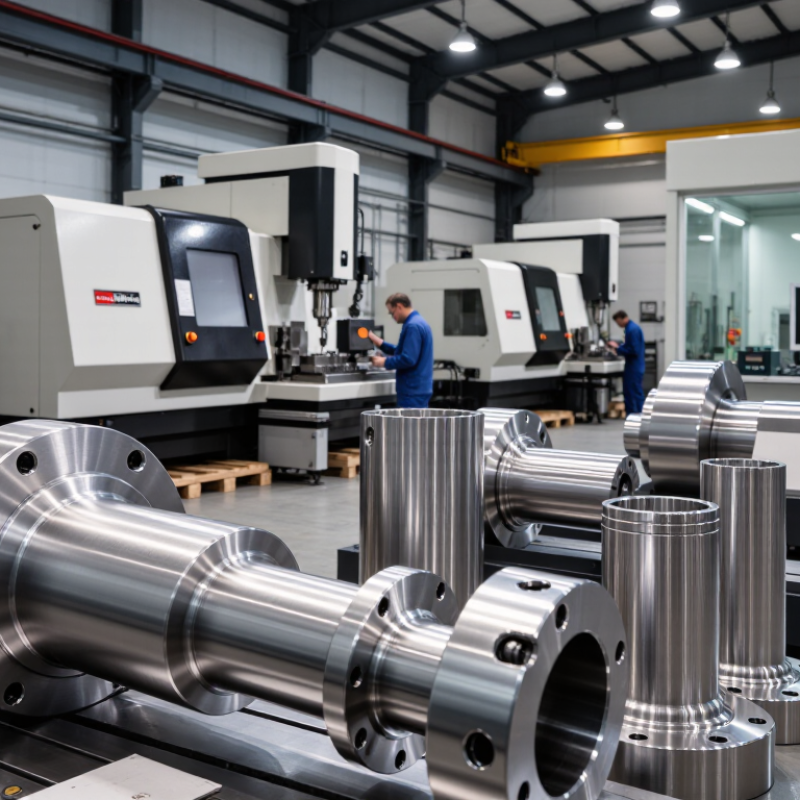
China CNC stainless steel parts suppliers are manufacturers that machine stainless steel components to customer drawings, models, or specifications. They may handle turning, milling, drilling, tapping, and secondary finishing. Their customers often need housings, shafts, brackets, valves, and food equipment components. A capable supplier combines modern equipment, trained operators, inspection procedures, and production planning. The term “supplier” should not mean a trading office only. That distinction matters.

In practice, buyers should examine material control closely. Ask for heat numbers, mill certificates, and traceability from raw bar to packed parts. Common grades include 304 and 316L, but the correct choice depends on corrosion, temperature, strength, and cleaning conditions. Experienced suppliers can explain tolerance limits instead of promising every dimension without discussion. They should use calibrated CMMs, micrometers, gauges, and documented sampling plans. Surface finish needs a measurable requirement, not just “smooth.” Good communication prevents expensive rework.

A reliable China CNC stainless steel parts supplier normally provides sample approval, inspection reports, packaging details, and realistic lead times. Review drawing revisions, thread standards, burr requirements, and critical dimensions before production. Video audits can reveal machine condition, inspection areas, and material storage. Still, remote checks have limits. Polished samples can hide weak process control. Small trial orders expose this faster than confident claims. Suppliers may miss details when drawings are unclear, so buyers should record questions and approve corrective actions in writing. Price matters, but repeatable quality matters more.

How CNC Stainless Steel Parts Are Designed and Manufactured

What Are the Best China CNC Stainless Steel Parts Suppliers?

How CNC Stainless Steel Parts Are Designed and Manufactured

Reliable CNC stainless steel parts begin with a manufacturable design. Engineers select stainless steel by corrosion exposure, strength, and cutting behavior. Common grades include 304 and 316, but they are not interchangeable. Grade 316 suits chloride-rich environments better because of its molybdenum content. World Stainless reported approximately 58.4 million tonnes of crude stainless steel production in 2023. This scale supports broad material availability, but it does not guarantee consistent quality.

The process usually starts with a 3D model, technical drawing, and tolerance plan. Designers should avoid deep narrow pockets and sharp internal corners. These features increase tool wear and machining time. A practical design may use a larger corner radius, controlled wall thickness, and accessible datum surfaces. Cutting speed, coolant delivery, and tool geometry then influence surface finish. Inspection should include calibrated coordinate measuring equipment, thread gauges, and material certificates. ISO 2768 can guide general tolerances, but critical dimensions need specific limits. Small mistakes matter.

Tips: Ask suppliers for a material certificate, first-article inspection report, and process capability data. Request photographs of fixturing and finished surfaces. Confirm whether quoted tolerances are realistic for the selected grade. Price comparisons can mislead. A cheaper quote may hide extra polishing, unstable tooling, or repeated inspections. Even experienced designers sometimes over-specify tolerances. That choice looks safe, but it can make production slower and less reliable.

Which Standards Define Supplier Quality and Precision?

When buyers compare China CNC stainless steel parts suppliers, standards offer a useful starting point. ISO 9001 shows that a supplier controls documented processes, inspections, corrective actions, and customer records. It does not prove that every turned shaft meets your drawing. That distinction matters.

Precision should be tied to ISO 1101 for geometric tolerancing and a stated measurement method. General tolerances under ISO 2768 can guide non-critical dimensions, but they should not replace product-specific tolerances. Ask for calibrated CMM reports, gauge records, and inspection samples linked to batch numbers. A 0.02 mm claim means little without temperature control, datum references, and a clear uncertainty statement. Small details expose weak systems.

For stainless steel, request material certificates such as EN 10204 Type 3.1, with heat numbers matching the shipment. ASTM or equivalent specifications should identify grade, chemistry, and mechanical properties. Surface finish needs a measurable Ra value and the inspection tool used. Review first-article reports, process capability data, and corrective-action records. Still, paperwork can look better than production. A trial order and independent dimensional check remain sensible. No standard removes every mistake. One uncomfortable lesson is that a supplier may pass a sample, then drift during longer runs. That risk deserves honest discussion.

What Are the Best China CNC Stainless Steel Parts Suppliers?

Which standards define supplier quality and precision?

The chart shows the ISO 2768-1 general linear tolerances for nominal dimensions from 30 to 120 mm. A smaller value indicates tighter dimensional control. Buyers should also verify ISO 9001 quality management, drawing-specific tolerances, material certificates, inspection reports, and GD&T capability before selecting a CNC stainless steel parts supplier.

Reference: ISO 2768-1 general tolerances for linear dimensions, size range >30 to 120 mm. These are general tolerance classes and do not replace product-specific drawing requirements.

How to Compare Chinese CNC Stainless Steel Parts Suppliers

Comparing Chinese CNC stainless steel parts suppliers requires more than checking hourly prices. World Stainless data shows China produced about 63% of global crude stainless steel in 2023. This scale creates strong material access, but it does not guarantee machining consistency. Ask for heat numbers, mill certificates, and EN 10204 3.1 documentation. Confirm that the certificate matches the actual batch used for your parts.

Review the supplier’s process evidence. ISO Survey data shows ISO 9001 certification is widely adopted worldwide, yet certification alone cannot prove tight-tolerance performance. Request first-article inspection reports, CMM results, surface-finish readings, and control plans. Compare equipment capability with your drawing requirements. A supplier using five-axis machining may still struggle with thin walls or deep internal threads.

Sample parts reveal practical discipline. Inspect edge breaks, burr removal, thread fit, and passivation marks under consistent lighting. Ask how operators control 304 and 316L material mix-ups. Check response times when a dimension fails. Fast replies matter, but corrective-action records matter more. Pricing deserves scrutiny, too. A low quote may exclude inspection, packaging, or secondary finishing. I would compare total delivered cost, not unit price alone. One weakness remains: remote audits cannot expose every production habit, so a small pilot order is still wiser than trusting polished documents.

What Questions Should Buyers Ask Before Placing an Order?

When comparing China CNC stainless steel parts suppliers, buyers should ask questions that expose process control. The 2024 World Stainless Association statistics reported global stainless-steel production near 62 million tonnes. High volume does not guarantee accurate machining.

Ask which stainless grade, heat number, and material certificate will accompany each batch. Confirm whether the supplier checks hardness, chemical composition, dimensions, and surface roughness. Request a sample inspection report with actual readings, not only promised tolerances. What is the machine’s positioning accuracy? Which gauges are calibrated? Can the supplier maintain ±0.02 mm across repeated production? These details often separate a reliable workshop from a capable-looking one.

Tips: Ask for a first-article approval before mass production. Require photos of critical dimensions and packaging. ISO 9001 certification can indicate a quality system, but it is not proof of perfect parts. The ISO Survey 2023 recorded more than 1.2 million ISO 9001 certificates worldwide, so buyers should verify the certificate scope and validity. Also ask about passivation, deburring, corrosion protection, minimum order quantity, replacement terms, and lead-time risks. A supplier may quote quickly yet explain delays poorly. I would also ask how rejected parts are recorded and corrected. That answer can reveal more than a polished factory presentation.

What Are the Best China CNC Stainless Steel Parts Suppliers? — Questions Buyers Should Ask Before Placing an Order

No. Evaluation Dimension Question Buyers Should Ask Practical Benchmark or Requirement Documents or Evidence to Request Why It Matters
1 Material Identification Can you supply the exact stainless-steel grade and heat/lot traceability? The quotation and drawing should specify the grade, such as 304/304L or 316/316L, together with the applicable material standard. Material test certificate, heat number, mill certificate, and lot traceability record. Different stainless-steel grades have different corrosion resistance, strength, weldability, and machining behavior.
2 Material Verification How do you verify that the received material matches the purchase order? Incoming inspection should include certificate review and, when required, positive material identification using an alloy analyzer. Incoming inspection procedure, material verification report, and equipment calibration record. Material mix-ups can cause premature corrosion, failed qualification tests, or regulatory nonconformity.
3 Dimensional Capability What dimensional tolerances can you hold consistently for this part geometry? Use the tolerances stated on the drawing; where no tolerance is specified, agree on a recognized general tolerance standard before production. Sample inspection report, capability data for critical dimensions, and calibrated measurement-equipment list. A general claim such as “high precision” does not define the actual capability for thin walls, deep cavities, or tight fits.
4 Surface Finish Can you achieve and measure the required surface roughness? State the target Ra value and measurement method on the drawing; a common machined range is approximately Ra 0.8–3.2 µm, depending on tooling, geometry, and process. Surface-roughness report, sample photographs, and profilometer calibration record. Surface finish affects sealing, friction, appearance, cleanability, and fatigue performance.
5 Deburring and Edge Control How are burrs, sharp edges, and tool marks controlled? The drawing should define edge-break limits, chamfers, radii, and whether sharp edges are prohibited. First-article photographs, edge-inspection criteria, and workmanship standard. Uncontrolled burrs may interfere with assembly, damage seals, create handling hazards, or contaminate clean systems.
6 Passivation and Corrosion Protection Is passivation required, and how will its effectiveness be verified? Specify the passivation process and acceptance criteria when improved corrosion resistance or removal of free iron is required; passivation is not a substitute for selecting the correct alloy. Process specification, treatment batch record, and corrosion or free-iron test results when applicable. Machining can leave embedded iron or surface contamination that reduces stainless-steel corrosion resistance.
7 Inspection Plan What inspection is performed before shipment, and which dimensions are checked? The control plan should identify critical, major, and minor characteristics, sampling frequency, inspection method, and acceptance criteria. Inspection and test plan, final inspection report, control plan, and nonconformance procedure. A defined inspection plan makes quality expectations measurable and reduces disputes after delivery.
8 Measurement Equipment Are the measuring instruments suitable for the tolerances and currently calibrated? Measurement resolution should be appropriate for the specified tolerance, and calibration should be traceable to a recognized national or international standard. Calibration certificates for CMMs, micrometers, gauges, height gauges, and other relevant instruments. Accurate machining cannot be confirmed with unsuitable or overdue measuring equipment.
9 First Article Approval Will you provide a first-article sample before full-batch production? Approve a production-representative sample against the complete drawing, including dimensions, material, finish, and special-process requirements. First-article inspection report, marked-up drawing, sample approval record, and retained reference sample. First-article approval identifies design-for-manufacturing or process problems before they affect the entire order.
10 Production Capacity What are your available machine types, work envelope, and monthly capacity for this part? The supplier should demonstrate that the machine travel, spindle/tooling configuration, and available capacity match the part size, tolerance, and order volume. Machine list, representative process plan, capacity statement, and production schedule. Capacity verification reduces the risk of delays, rushed setups, and uncontrolled subcontracting.
11 Lead Time What is the lead time for samples and for repeat production? Request separate timelines for engineering review, material purchasing, first articles, production, inspection, and shipping; lead time should be confirmed in writing. Detailed production schedule, quoted validity period, and shipment milestone plan. Breaking down lead time exposes material or outside-processing bottlenecks that a single total number can hide.
12 Minimum Order and Pricing What are the minimum order quantity, tooling charges, setup fees, and price-break levels? The quotation should separate one-time engineering or fixture costs from recurring unit pricing and identify assumptions for material, inspection, finishing, packaging, and freight. Itemized quotation, payment terms, tooling ownership terms, and price-validity period. A transparent cost structure makes low-volume prototypes and higher-volume production easier to compare.
13 Quality Management Which quality-management procedures control nonconforming parts and corrective actions? The supplier should have documented procedures for root-cause analysis, containment, corrective action, rework, scrap, and customer approval. Quality manual, sample corrective-action report, nonconformance log format, and audit results. Effective corrective action prevents recurring defects instead of merely replacing individual parts.
14 Subcontracting Control Are heat treatment, passivation, plating, laser marking, or inspection outsourced? All outside processes should be identified, approved, and traceable; changes to approved subcontractors should require buyer notification when specified by contract. Approved-process list, subcontractor certificates, treatment records, and chain-of-custody documentation. Outside processing can affect corrosion resistance, dimensions, cleanliness, and delivery timing.
15 Packaging and Cleanliness How will the finished stainless-steel parts be cleaned, protected, and packaged? Packaging should prevent scratching, moisture exposure, contamination, and part-to-part contact; clean-room or protective packaging requirements should be stated in advance. Packaging specification, cleanliness procedure, package photographs, and handling instructions. Good machining can be compromised by contamination, corrosion staining, or impact during transport.
16 Communication and Engineering Support Who reviews drawings, tolerances, and manufacturability questions before quoting? A qualified technical contact should review material, datum structure, tolerances, surface finish, inspection requirements, and potential design risks before order confirmation. Design-for-manufacturing feedback, quotation review notes, revision-control procedure, and response-time commitment. Early engineering communication reduces rework, ambiguous requirements, and unexpected cost increases.
17 Traceability and Records How long will production, material, and inspection records be retained? Agree on record-retention duration, document format, revision control, and the information that must accompany each shipment. Traceability matrix, batch numbering method, certificate template, and document-retention policy. Traceability supports audits, field investigations, warranty claims, and repeat-order consistency.
18 Commercial and Delivery Risk What happens if parts fail inspection, arrive late, or differ from the approved sample? The purchase agreement should define inspection rights, defect notification, replacement or refund terms, corrective-action deadlines, and responsibility for shipping damage. Quality agreement, purchase-order terms, warranty conditions, and escalation contacts. Clear remedies protect the buyer when delivered parts do not meet the approved technical and commercial requirements.
Note: Tolerances, surface-finish values, inspection methods, certificates, and lead times should always be agreed against the specific part drawing, applicable standards, production volume, and end-use requirements.
Close
Go top
Translate »