

China Best Poly Net Fabric Supplier for Global Buyers

Global demand for technical textiles is moving toward lighter, stronger, and more specialized materials. Grand View Research valued the global technical textile market at approximately USD 225.99 billion in 2023. It also projects steady growth through 2030. These figures explain why international buyers continue evaluating China-based manufacturing partners for Poly Net Fabric.

A reliable supplier must offer more than competitive pricing. Buyers need stable mesh openings, consistent yarn denier, clean edges, and dependable roll length. Polyester netting may look simple. It is not.

Applications range from agricultural covers and protective screens to packaging, filtration, and industrial reinforcement. Each use requires different tensile strength, air permeability, coating performance, and ultraviolet resistance. ASTM, ISO, and customer-specific testing can help verify those details. Factory audits, laboratory reports, and traceable production records also reduce purchasing uncertainty.

Industry research from MarketsandMarkets has identified technical textiles as a growing global sector, supported by construction, agriculture, transportation, and industrial applications. However, market forecasts are not guarantees. Raw-material prices, energy costs, freight changes, and inconsistent quality can quickly affect project results.

The strongest China supplier combines production experience with transparent communication. It should explain polymer selection, weaving settings, finishing options, and inspection procedures clearly. Samples matter. So do repeated tests.

No supplier is perfect. Even an experienced factory may need to improve lead-time accuracy or documentation. Global buyers should compare measurable performance, not impressive claims. That disciplined approach creates a safer path toward long-term Poly Net Fabric sourcing.
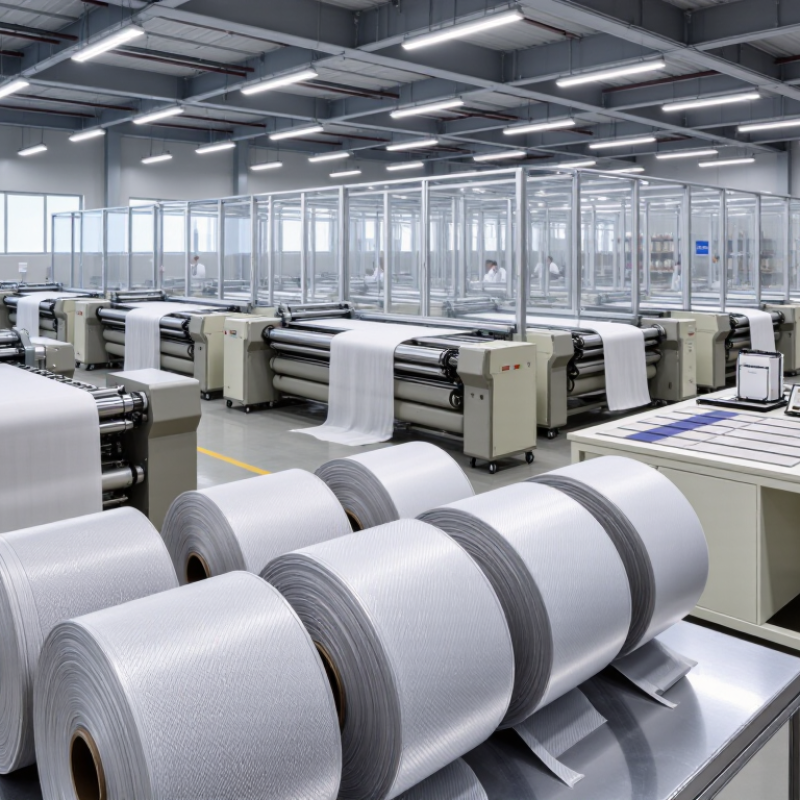
China Best Poly Net Fabric Supplier for Global Buyers

Polyester Net Fabric Basics: Mesh Count, GSM, Denier, and ISO 2062 Testing

Polyester net fabric is judged by more than appearance. Mesh count shows the number of openings per inch, while yarn thickness affects each opening’s size. A higher mesh count usually creates a finer surface, but construction details still matter.

GSM measures fabric weight per square meter. It helps buyers compare coverage, handling, and material consumption. Denier describes yarn linear density. Higher denier yarns often provide better abrasion resistance, though they may reduce softness or flexibility. In practical sourcing, I check mesh count with a calibrated lens and confirm GSM from several cut samples. One sample can mislead.

Tips: Request mesh count, GSM, denier, width, and tolerance limits together. Ask for samples from different production rolls. Keep records of test conditions.

ISO 2062 testing evaluates yarn breaking force and elongation using controlled procedures. The laboratory should identify the yarn type, test speed, conditioning atmosphere, sample count, and individual results. Average strength is useful, but variation deserves attention. A fabric may pass yarn testing and still show uneven coating, loose edges, or inconsistent apertures. That gap is easy to overlook. Experienced suppliers inspect both raw yarn and finished net fabric before shipment. Buyers should review the test report, not only a passing number. For demanding applications, independent verification can expose weaknesses that routine inspection misses.

Polyester Net Fabric Basics: Mesh Count, GSM, Denier, and ISO 2062 Testing

Representative polyester net fabric specifications. Higher mesh counts generally indicate finer openings, while GSM and denier commonly increase as fabric coverage and yarn size increase.

Mesh count refers to the approximate number of openings per inch, GSM means grams per square metre, and denier describes the linear density of the yarn. ISO 2062 is used to determine the breaking force and elongation of individual yarns under controlled test conditions; actual results depend on yarn type, construction, conditioning, and test parameters.

China’s Supply Base: About US$293.6 Billion in 2023 Textile Exports

China Best Poly Net Fabric Supplier for Global Buyers

China’s textile supply base exported about US$293.6 billion in 2023. This scale gives global buyers broad access to poly net fabric suppliers, yarn mills, coating facilities, and inspection services. In practice, a reliable supplier should explain mesh count, filament type, width tolerance, weight, and finishing method clearly. Samples should match production rolls in color, stretch, and opening size. Small differences matter. A one-millimeter variation can affect cutting, airflow, or product fit.

Tips: Request a physical sample and a recent test report. Check tensile strength, tear resistance, colorfastness, and shrinkage. Confirm packing details before placing a bulk order. Ask how the supplier controls shade differences between batches. Factory visits can help, but they are not perfect proof of consistency. Independent inspection remains useful for larger shipments.

Experienced buyers also review communication speed and corrective action. Good suppliers document defects with photos, measurements, and production records. They should discuss realistic lead times instead of promising everything quickly. China’s export depth supports flexible order volumes, yet supplier selection still requires careful judgment. My own concern is that some comparisons focus too much on price. That can hide weaker yarn, uneven knitting, or unstable finishing. A lower quote may become expensive after rework, delays, or rejected rolls. Reliable sourcing depends on evidence, repeat testing, and clear written specifications.

China Best Poly Net Fabric Supplier for Global Buyers – China’s Supply Base: About US$293.6 Billion in 2023 Textile Exports
Data Dimension Reference Data Buyer Relevance Source or Technical Basis
China textile and apparel exports in 2023 Approximately US$293.6 billion Indicates the scale and depth of China’s textile manufacturing and export supply base. China Customs export statistics as reported for the 2023 textile and apparel sector.
Primary polymer Polyester, a synthetic fiber produced from polyethylene terephthalate (PET) Provides good dimensional stability, strength, quick drying, and resistance to many common chemicals. Standard textile-fiber description for polyester/PET materials.
Common fabric construction Warp-knitted net, weft-knitted mesh, or woven net construction Construction affects stretch, edge stability, tear behavior, air permeability, and end-use performance. General textile manufacturing classification; final construction should be confirmed against a product sample.
Typical fiber composition 100% polyester; polyester blends may also be available for specialized performance requirements. Helps buyers match material content with durability, appearance, cost, and labeling requirements. Commercially common polyester mesh and net-fabric specifications.
Indicative fabric weight Approximately 40–250 g/m² for many commercial net-fabric applications Lower weights suit lightweight linings, bags, and ventilation panels; higher weights suit sports, industrial, and protective applications. Indicative commercial range; actual availability depends on yarn size, construction, and mesh opening.
Indicative usable width Approximately 150–320 cm for many production configurations Wider fabric can reduce cutting waste in apparel, agricultural, filtration, and large-panel applications. Indicative commercial range; finished width should be confirmed after finishing and heat-setting.
Indicative mesh opening Approximately 1–10 mm, with finer or coarser constructions available by design Mesh opening influences airflow, visibility, drainage, filtration behavior, and particle retention. Indicative product-development range; opening size should be measured on approved samples.
Color and finishing options Solution-dyed or piece-dyed colors; common finishes include heat-setting, calendering, coating, flame-retardant, and water-repellent treatments. Finishing selection affects color fastness, dimensional stability, hand feel, weather resistance, and regulatory compliance. Common textile dyeing and finishing processes; performance claims require testing.
Dimensional stability testing Wash and heat-setting conditions should be defined before approval; shrinkage is application- and construction-dependent. Important for garments, sportswear, upholstery, and products exposed to repeated washing or elevated temperatures. ISO 6330 for domestic washing and drying procedures; ISO 5077 for dimensional-change testing.
Mass-per-unit-area testing Fabric weight is normally verified in grams per square metre (g/m²). Supports purchasing consistency, production control, costing, and product specification management. ISO 3801, Textiles — Woven fabrics — Determination of mass per unit length and mass per unit area.
Colorfastness evaluation Testing may cover washing, rubbing, perspiration, light, and seawater, depending on the end use. Helps buyers establish measurable quality requirements for apparel, outdoor products, and consumer goods. ISO 105 series for textile colorfastness testing.
Recycled polyester verification Recycled content may be supported by chain-of-custody certification when required by the buyer. Useful for sustainability programs, recycled-content claims, and customer-specific compliance requirements. Global Recycled Standard (GRS) requirements; certification status must be verified for the specific production facility and product.
Export classification HS classification depends on whether the material is knitted, crocheted, woven, coated, or otherwise finished. Correct classification supports accurate duty calculation, customs documentation, and import compliance. The applicable HS code should be confirmed with the importer or customs authority using the final construction and composition.
Recommended approval documents Technical data sheet, composition declaration, approved color standard, test report, roll inspection record, and packing specification Creates a clear quality baseline for repeat orders and reduces specification disputes. Standard international textile procurement practice.

Note: Specification ranges marked as indicative are commonly used commercial reference ranges rather than universal limits. Final values should be confirmed through a signed technical specification and an approved production sample.

Quality Benchmarks: ASTM D5035 Strength and ISO 105-C06 Colorfastness

China Best Poly Net Fabric Supplier for Global Buyers

Quality Benchmarks: ASTM D5035 Strength and ISO 105-C06 Colorfastness

For global buyers, poly net fabric quality starts with measurable performance. ASTM D5035 evaluates tensile strength through a strip test, showing how fabric handles pulling force before failure. Testing should record machine-direction and cross-direction results. These figures help buyers compare mesh rolls for sports barriers, agricultural covers, and industrial screening. A reliable supplier should provide test conditions, specimen size, conditioning details, and failure observations. Numbers without testing context can mislead.

ISO 105-C06 examines colorfastness during domestic and commercial laundering. It checks color change and staining under controlled washing conditions. This matters when net fabric faces repeated cleaning, moisture, detergent, or outdoor handling. Buyers should review the washing procedure, temperature, detergent type, and grading method. A bright sample may still lose color after several cycles. Appearance alone is not enough.

Tips: Request recent laboratory reports for the exact fabric construction. Confirm yarn thickness, mesh size, coating, and color before approval. Keep retained samples for comparison. Small differences matter. Also, avoid treating one successful test as permanent proof. Production settings can shift, and that weakness deserves honest review. A pre-shipment inspection can catch uneven tension, loose edges, or shade variation before loading.

Buyer Specifications: 20–200 GSM, 1–10 mm Mesh, UV and Coating Needs

China Best Poly Net Fabric Supplier for Global Buyers

Poly net fabric selection starts with measurable requirements, not attractive samples. For global buyers, 20–200 GSM covers lightweight garden mesh, protective screens, and stronger industrial fabrics. Mesh openings from 1–10 mm affect airflow, visibility, strength, and installation. A 1 mm mesh may block smaller particles, while 10 mm mesh allows faster air movement. Always confirm whether the stated mesh size means aperture or strand spacing.

Always confirm whether the stated mesh size means aperture or strand spacing.

UV resistance matters when fabric stays under sunlight for months. Ask for test information, polymer details, and expected outdoor service conditions. Coating requirements should be precise: color, thickness, adhesion, flexibility, and water resistance can change the final performance. During purchasing work, I have found that buyers sometimes request “heavy coating” without defining a target weight. That creates avoidable disputes. A written specification sheet is safer than a verbal agreement.

Tips:

Request a sample with its GSM and mesh size recorded. Check dimensions after cutting. Bend the coated fabric repeatedly and inspect cracking. Ask for production photos, inspection records, and packing details. Small tests help, but they do not replace field evaluation. One overlooked issue is edge reinforcement. Weak edges can fail before the netting does, especially during tensioned installation. A supplier should discuss tolerance ranges openly, because perfect uniformity is difficult in real production.

Supplier Verification: MOQ, Lead Time, REACH, RoHS, and OEKO-TEX Evidence

Choosing a China poly net fabric supplier requires more than comparing prices. Supplier verification should begin with clear production details and traceable documents.

Ask for the exact MOQ by color, mesh size, width, and finishing method. A quoted MOQ may change when custom colors require separate dyeing. Confirm whether the lead time includes sampling, production, inspection, and shipping preparation. Request a dated production schedule, not only a general promise.

Small details matter. Delays often begin with unclear approvals.

For REACH and RoHS, request current laboratory reports linked to the actual fabric composition and color. Check the testing laboratory, report date, sample description, and tested substances. Generic certificates are weak evidence.

For OEKO-TEX evidence, verify the certificate number, product scope, validity period, and covered production site. The certificate should match the intended fabric, not a different material.

Ask for batch inspection records, color fastness results, tensile strength data, and a retained sample. These records help compare delivered rolls with approved samples.

A professional supplier should answer technical questions without avoiding uncomfortable limitations.

Still, no document removes every risk. Test a pre-production sample independently when the order is important. This may add cost, but it can expose coating variation, unstable width, or unexpected odor before bulk production.

A spreadsheet alone can mislead. Supplier evidence becomes useful only when documents, samples, and delivery performance agree.

Close
Go top
Translate »