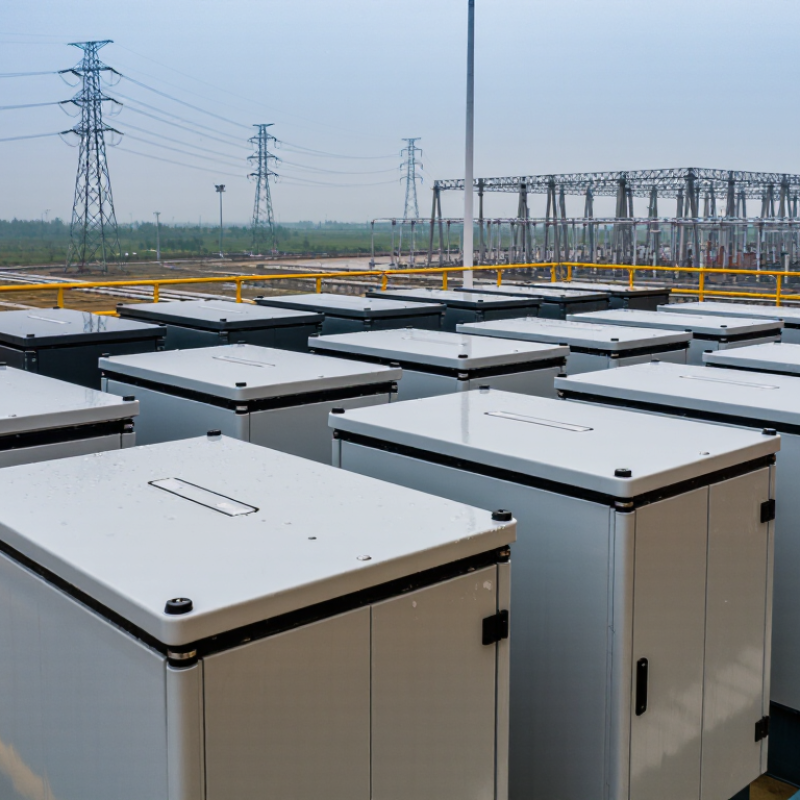
China Best Waterproof Switchgear Suppliers for Global Buyers

For global buyers, choosing the right Waterproof Switchgear supplier involves more than comparing prices or enclosure photographs. A dependable solution must protect live electrical components from rain, dust, humidity, salt spray, and accidental water exposure. It must also support safe maintenance in demanding environments, from coastal substations to industrial plants and outdoor infrastructure.

Dr. John Cadick, an electrical safety engineer and author, puts the practical issue plainly: “A switchgear enclosure is only as reliable as its weakest interface.” That interface may be a cable gland, door seal, ventilation opening, or poorly finished joint. Small details matter. A supplier should provide clear IP-rating evidence, material specifications, temperature data, factory-testing records, and installation guidance. Certificates alone are not enough.

This guide examines China’s leading Waterproof Switchgear suppliers for international purchasing teams. It considers manufacturing experience, customization capability, quality control, export support, and response speed. Stainless steel, powder-coated steel, and engineered polymer enclosures each perform differently. Coastal projects may need stronger corrosion resistance. Desert sites may require better dust sealing and thermal design.

The selection process is not flawless. Product pages can look impressive while leaving critical test conditions unclear. Buyers should ask difficult questions before approving a sample or contract. Request drawings. Review test reports. Confirm spare-part support.

A waterproof label does not guarantee field reliability. Good engineering does.

China Best Waterproof Switchgear Suppliers for Global Buyers

What Defines a Waterproof Switchgear Supplier in China?

A credible Chinese supplier treats waterproofing as tested performance, not a sales phrase.
The enclosure should show a suitable IP rating under IEC 60529 testing. Ask for test records, sampling dates, and laboratory details. A reliable factory also explains its limits. IP65 may resist water jets, but it does not mean safe underwater operation.

Practical experience appears in small details. Check gasket compression, door alignment, cable gland quality, drainage design, and corrosion protection. Stainless steel, coated steel, or engineering plastic may suit different sites.

In a coastal installation, salt exposure changes the material decision. In a dusty workshop, sealing around cable entries becomes critical. Suppliers should provide wiring diagrams, dimensional drawings, load data, and clear installation instructions.

Traceability separates a manufacturer from a trading desk. Batch numbers, incoming-material checks, routine electrical tests, and final inspection photos build confidence. Ask how the supplier handles failed samples and field complaints. The answer may reveal more than a polished catalog. Some factories still rely heavily on manual inspection, so consistency deserves honest discussion. Request a pre-shipment inspection when the project is sensitive. A capable supplier adapts enclosure size, circuit layout, terminals, and mounting options without weakening protection. Fast replies are useful, but accurate replies matter more.

Key Waterproof Ratings and Standards for Global Applications

For global buyers, “waterproof” switchgear should be judged by its tested ingress rating. The IEC 60529 system uses IP codes. IP65 protects against dust and water jets. IP66 withstands stronger water jets. IP67 allows temporary immersion, usually up to one metre under defined test conditions. IP68 covers deeper or longer immersion, but the manufacturer must state the exact limits.

These ratings are not interchangeable. A cabinet rated IP67 may still perform poorly under continuous high-pressure washing. NEMA 250 classifications are widely used in North America, yet they do not convert perfectly to IEC IP codes. Check the test report, gasket material, door compression, cable glands, and drain design. Small details matter. A missing gland seal can defeat an excellent enclosure.

Global applications also require attention to temperature, ultraviolet exposure, salt spray, and condensation. For low-voltage assemblies, IEC 61439 can help verify construction, temperature rise, and functional safety. Ask suppliers for current certificates, routine inspection records, and clear installation limits. Field conditions often differ from laboratory tests. Dust may settle around hinges, while trapped moisture appears after nighttime cooling. IP ratings describe defined tests, not every real-world environment. This distinction is easy to overlook.

China Best Waterproof Switchgear Suppliers for Global Buyers: Key Waterproof Ratings and Standards

IEC 60529 defines IP water-protection levels from IPX1 to IPX8. The chart compares the specified minimum exposure duration for representative water-ingress tests. IPX8 conditions are agreed between the manufacturer and the user, so no universal duration is shown.

Note: IPX5 and IPX6 tests require at least 1 minute per square metre of enclosure surface, with a minimum total duration of 3 minutes. IPX7 specifies temporary immersion at 1 metre for 30 minutes. Always verify the complete IP rating and applicable regional requirements before specifying switchgear.

Main Types of Waterproof Switchgear Available from Chinese Suppliers

Chinese suppliers offer several main types of waterproof switchgear for outdoor and demanding industrial environments. Outdoor low-voltage switchboards commonly use galvanized steel or stainless-steel cabinets. They may include circuit breakers, busbars, surge protection, and cable terminals. IP65 and IP66 designs help resist rain and dust. However, an IP rating alone does not guarantee long-term field performance.

Compact medium-voltage ring main units are another option. They suit distribution networks, commercial sites, and renewable-energy installations. Some suppliers provide sealed gas-insulated or solid-insulated structures, reducing exposure to moisture. Automatic transfer switch cabinets support hospitals, data centers, and factories that need backup power. Motor control centers and pump-control cabinets are also available, often with viewing windows and lockable doors. Small details matter, such as bottom cable glands, drainage paths, and anti-condensation heaters.

From practical procurement work, I would request enclosure drawings, protection-test records, and sample inspection before ordering. Check the cabinet material, paint thickness, busbar insulation, and terminal spacing. Ask whether testing reflects rain, salt mist, ultraviolet exposure, and temperature changes. A higher IP rating is not always better; poor ventilation can trap heat inside. I have seen otherwise solid cabinets fail because water entered through cable glands. Supplier communication can also be imperfect, so technical requirements should be written clearly and checked line by line.

How to Evaluate Quality, Customization, and Manufacturing Capabilities

Evaluating China’s waterproof switchgear suppliers requires more than comparing quotations. Start with enclosure materials, sealing design, and protection ratings. Ask for test reports covering water ingress, insulation resistance, temperature rise, and mechanical endurance. A credible supplier should explain test conditions, equipment calibration, and sample identification clearly. Request recent production photos and traceable material records. Small details matter.

Customization should be measured against real site conditions. Share your voltage, current, installation location, cable entry direction, ambient temperature, and maintenance space. Experienced engineers can recommend stainless steel, coated steel, or reinforced polymer enclosures. They should also confirm busbar sizing, gland plates, locks, ventilation, and drainage. Request a dimensional drawing before production. It prevents expensive changes later.

Manufacturing capability becomes visible through process control. Review welding quality, coating thickness, assembly procedures, and final inspection records. Ask whether each unit receives continuity, dielectric, and functional testing before shipment. A supplier with in-house fabrication usually responds faster to design changes. However, “in-house” can be overstated. Verify it during a video audit or independent inspection. One overlooked weakness is spare-part planning. Confirm replacement seals, terminals, labels, and drawings are available for future maintenance. Price still matters, but the cheapest offer may reflect thinner materials, limited testing, or weaker documentation.

China Best Waterproof Switchgear Suppliers for Global Buyers - How to Evaluate Quality, Customization, and Manufacturing Capabilities
Evaluation Dimension Recommended Benchmark or Requirement Relevant Standard or Test Basis Evidence Buyers Should Request Customization and Manufacturing Check Priority
Ingress Protection Use IP54 or higher for protected outdoor locations. Consider IP65 or IP66 where the enclosure may be exposed to water jets, dust, or severe weather. The required rating should match the installation environment. IEC 60529: Degrees of protection provided by enclosures. Third-party or witnessed IP test report, test configuration, enclosure drawings, gasket specification, and door-sealing details. Confirm whether the selected IP rating remains valid after cable glands, ventilation units, meters, doors, and field modifications are installed. Critical
Electrical Safety and Assembly Design Low-voltage assemblies should be designed and verified for rated current, short-circuit withstand, temperature rise, clearances, creepage distances, and protective-circuit continuity. IEC 61439-1 and the applicable product part of the IEC 61439 series. Design verification records, routine test forms, single-line diagrams, rated data sheet, and protective conductor continuity results. Check whether the manufacturer can revise busbar layouts, feeder numbers, component positions, and cable-entry arrangements without weakening verification coverage. Critical
Medium-Voltage Metal-Enclosed Construction For medium-voltage switchgear, verify compartmentalization, internal arc classification where required, mechanical interlocks, earthing arrangements, and pressure-relief provisions. IEC 62271-200 for AC metal-enclosed switchgear and controlgear above 1 kV and up to 52 kV. Type-test certificates, internal arc classification, rated voltage and current data, interlock drawings, and factory inspection records. Confirm the available range of busbar sections, withdrawable or fixed modules, cable compartments, relay panels, and environmental options. Critical
Enclosure Material and Corrosion Resistance Material selection should reflect humidity, salt exposure, chemicals, ultraviolet radiation, and mechanical impact. Outdoor projects commonly require coated steel, stainless steel, or aluminum according to the site conditions. Coating performance may be assessed using ISO 9227 salt-spray testing and the specified coating system requirements. Material certificates, coating-system description, paint thickness records, adhesion results, corrosion-test reports, and surface-preparation procedure. Evaluate the supplier’s ability to provide marine-grade finishes, stainless fasteners, sealed hinges, drainage design, and replacement coating options. High
Water Management and Condensation Control A waterproof enclosure must also control condensation. Good designs use sloped surfaces, drainage paths, sealed cable entries, anti-condensation heaters, thermostats, and suitable ventilation or pressure-equalization methods. Project environmental specification, IEC 60529, and the manufacturer’s validated design procedures. Internal layout drawings, drainage details, heater and thermostat ratings, cable-gland schedule, and condensation-risk assessment. Ask whether the supplier can adapt drainage, heater control, cable-entry orientation, and rain-canopy design to local climate conditions. High
Electrical Ratings Verify rated operational voltage, insulation voltage, frequency, busbar current, short-time withstand current, peak withstand current, and prospective short-circuit level against the project specification. Applicable IEC 61439 or IEC 62271 requirements and the approved project specification. Technical data sheet, calculation package, type-test evidence, nameplate sample, and protection-coordination information. Check the available rating combinations and whether non-standard current, voltage, frequency, or short-circuit requirements can be engineered and verified. Critical
Factory Acceptance Testing Routine verification should cover wiring, protective circuits, insulation, dielectric performance where applicable, mechanical operation, functional interlocks, and control-system operation. IEC 61439 routine verification or IEC 62271 routine tests, depending on equipment type. Approved inspection and test plan, signed FAT reports, calibration certificates, punch-list records, and customer-witness procedure. Confirm the supplier can support remote or on-site FAT, staged inspections, multilingual documentation, and customer-specific test sequences. Critical
Component Traceability Every major device should be identifiable by part number, rating, revision, and production batch. Traceability should extend to busbars, insulation materials, terminals, relays, breakers, and enclosure components. Manufacturer quality-management procedures and project quality plan. Approved bill of materials, incoming-inspection records, serial-number register, material certificates, and change-control history. Assess whether equivalent components require prior approval and whether substitutions are formally documented before production. High
Customization Capability Common customization areas include enclosure dimensions, cable-entry direction, busbar arrangement, feeder quantity, metering, protection relays, communication protocols, labels, and local code requirements. Approved design drawings, project specification, and applicable IEC standards. Previous anonymized drawings, engineering-change procedure, 3D or fabrication drawings, wiring diagrams, and sample customization schedule. Prefer suppliers with in-house electrical design, sheet-metal fabrication, busbar processing, wiring, programming, and final assembly. High
Manufacturing Process Control Key processes should include controlled cutting, bending, welding or fastening, surface treatment, busbar preparation, torque control, wiring inspection, sealing, and final functional testing. Documented quality-management system, process-control plan, and applicable IEC verification requirements. Process flow chart, inspection checkpoints, torque records, calibration list, nonconformance reports, and corrective-action records. Factory visits should verify that critical processes are performed in-house rather than relying entirely on uncontrolled subcontracting. High
Production Capacity and Delivery Control Capacity should be judged by verified production resources, engineering workload, test-bench availability, material lead times, and documented on-time delivery performance—not by a stated annual output alone. Project schedule, capacity plan, procurement plan, and production-control procedure. Manufacturing schedule, critical-component lead-time list, production-area photos or audit findings, shipment records, and recovery plan for delays. Confirm the supplier can separate prototype, standard, and mass-production workflows while maintaining the same quality controls. Important
Documentation and Export Support A complete supply package normally includes approved drawings, wiring diagrams, manuals, test reports, certificates, packing lists, spare-parts lists, and maintenance instructions. Project documentation requirements and destination-country electrical regulations. Sample document index, revision-control procedure, English technical files, export packing specification, and certificate-management process. Check support for metric or imperial dimensions, local labeling, destination voltage systems, customs documents, and remote commissioning. High
Warranty and After-Sales Service Commercial terms should define warranty duration, response time, replacement-part availability, remote troubleshooting, field-service scope, and exclusions related to incorrect installation or environmental misuse. Purchase contract, project quality plan, and agreed service-level terms. Warranty template, service-response procedure, spare-parts matrix, escalation contacts, and anonymized service records. Evaluate the supplier’s ability to provide commissioning guidance, troubleshooting in English, replacement enclosures or components, and long-term technical support. Important
Overall Supplier Qualification A strong candidate should satisfy the required electrical ratings, environmental protection, testing, documentation, customization, and delivery conditions simultaneously. The lowest price should not replace technical verification. Project-specific compliance matrix combining applicable IEC standards, local regulations, and purchaser requirements. Completed technical questionnaire, compliance matrix, test evidence, factory-audit report, reference project documentation, and signed deviation list. Use a weighted evaluation model: technical compliance 35%, waterproof and corrosion performance 20%, manufacturing control 15%, customization 10%, delivery 10%, service and commercial terms 10%. Critical

Note: The benchmarks above are general procurement guidance. Final ratings, tests, materials, and acceptance criteria should be confirmed against the installation environment, voltage level, local regulations, and the approved project specification.

Export, Certification, and Supplier Selection Considerations for Buyers

China’s switchgear exports are growing with global grid investment. MarketsandMarkets estimated the global switchgear market at USD 103.5 billion in 2023, reaching USD 146.5 billion by 2028. Buyers should treat those figures as market signals, not proof of supplier quality.

Check the enclosure rating carefully. IEC 60529 defines IP protection levels, while IEC 61439 covers low-voltage assemblies. Medium-voltage projects may require IEC 62271 compliance. Ask for accredited laboratory reports, routine test records, drawings, and serial-number traceability. A certificate without matching test evidence is weak. Very weak.

Export readiness also depends on destination rules. Confirm applicable CE, CB Scheme, RoHS, or local approvals before signing. Request packing specifications, moisture protection, HS codes, commercial invoices, and agreed Incoterms. A supplier experienced with export paperwork can prevent customs delays, especially when wooden crates need treatment certificates.

Factory evaluation should include busbar material, sealing-gasket quality, coating thickness, thermal testing, and final inspection procedures. Review factory acceptance testing through video or an independent inspector. A sample should face simulated rain, cable bending, and repeated door operation. I would also compare warranty response times, spare-part availability, and field-service coverage. Price still matters, but a lower quote may hide thinner steel, incomplete testing, or expensive replacement parts. Supplier selection is not perfectly predictable, and even careful buyers can miss installation conditions.

Close
Go top
Translate »