How to Choose Weaving Yarn in 2026?
Choosing Weaving Yarn in 2026 requires more than comparing color cards or package prices. The yarn must match the loom, fabric structure, end use, and production realities. A soft yarn may feel attractive, yet it can create shedding, uneven tension, or broken ends during weaving. Small samples reveal these problems early.
Industry data also changes the decision. Textile Exchange’s Materials Market Report 2024 estimated global fiber production at 124 million tonnes in 2023. It projects about 160 million tonnes by 2030. This growth increases pressure to examine recycled content, responsible sourcing, and fiber traceability. However, recycled does not automatically mean suitable. The yarn still needs consistent length, strength, twist, and processing performance. The International Textile Manufacturers Federation’s 2024 industry survey also reflected cautious investment and uneven market demand. That suggests buyers should test before committing to large volumes.
A practical selection begins with the fabric’s purpose. Cotton Weaving Yarn can suit breathable home textiles, while wool may provide warmth and natural elasticity. Linen offers a crisp texture but can feel less forgiving on some looms. Polyester and recycled polyester often support durability and dimensional stability. Check yarn count, ply, twist direction, tensile strength, abrasion resistance, moisture behavior, and dye compatibility. Ask suppliers for test results and certification details. On the loom, inspect tension every few minutes. Watch the selvedge closely.
There is no perfect yarn. Even experienced weavers sometimes choose based on habit. That can be a costly shortcut. A controlled sample remains more reliable than a confident assumption.
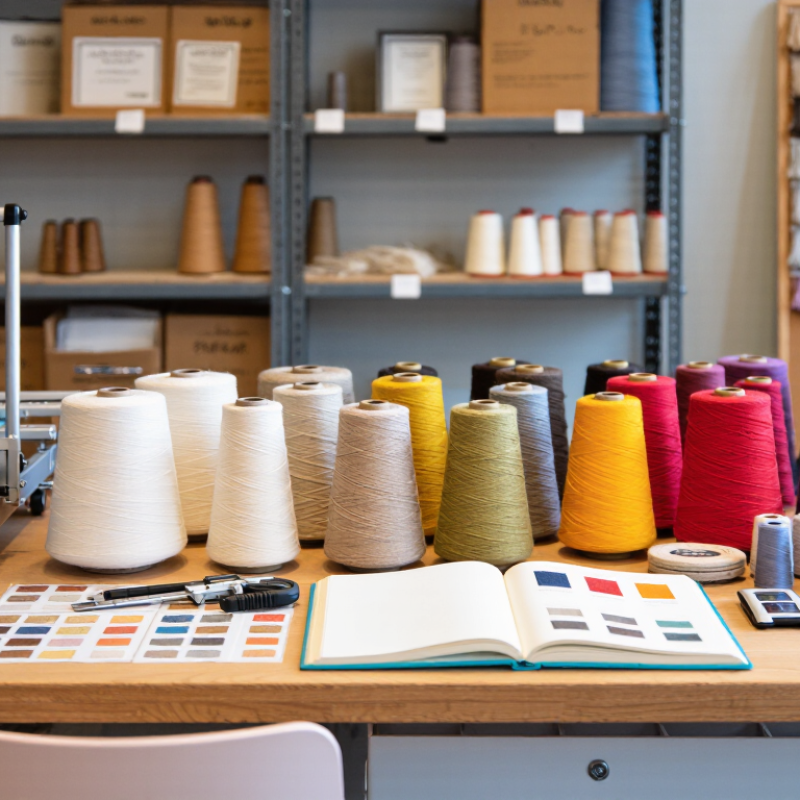
Define the Weaving Goal Using ISO 2060 Yarn Count: Tex, Ne, and Nm
How to Choose Weaving Yarn in 2026?
Define the Weaving Goal Using ISO 2060 Yarn Count: Tex, Ne, and Nm
Choosing weaving yarn begins with the fabric’s purpose, not its color. ISO 2060 helps measure yarn linear density through mass and length. Tex expresses grams per 1,000 meters. A higher Tex means a heavier, thicker yarn. This suits rugs, upholstery, and firm utility cloth. A lower Tex often creates lighter, softer fabric.
Ne and Nm use an indirect counting system. Ne shows how many 840-yard hanks weigh one pound. Nm shows how many 1,000-meter lengths weigh one kilogram. Higher Ne or Nm numbers indicate finer yarn. I often write the target count beside the fabric sample. It prevents a visual guess from controlling the purchase. Still, count alone is not enough.
Before weaving, check fiber type, twist, ply, strength, and moisture conditions. Two yarns with similar Tex can behave differently on the loom. A tightly twisted yarn may produce sharper edges but feel less flexible. A loosely twisted yarn can create a softer surface and more fuzz. Measure under controlled conditions when possible, because humidity changes mass slightly. Small errors matter.
I once selected yarn by Nm only. The cloth looked attractive, but the warp broke too often. The count was correct; the structure was wrong. Test a short warp section first. Record the count, sett, tension, and fabric response. Your first choice may need revision. That is useful evidence, not failure.
Evaluate Yarn Strength with ASTM D2256 and ISO 2062 Tenacity Results
Choosing weaving yarn in 2026 requires more than checking softness, color, or price. During mill evaluations, I start with tenacity because weak yarns create stoppages, broken ends, and uneven cloth. ASTM D2256 measures tensile properties using a single-strand method. ISO 2062 also reports breaking force and elongation for individual yarns. Both standards are useful. They are not identical.
Ask the laboratory for tenacity in cN/tex, not breaking force alone. Tenacity adjusts strength for yarn fineness, allowing fairer comparisons between counts. Review average values, elongation at break, and variation across specimens. A high average can mislead when a few samples perform poorly. Check conditioning and testing conditions. Standard atmosphere, gauge length, pulling speed, pretension, and sampling plans can change results. Record them beside every report. Small details matter.
When comparing ASTM D2256 with ISO 2062 results, avoid treating the numbers as interchangeable. Different laboratories may use different clamps, equipment settings, or conditioning times. Request the full test method and confirm whether the yarn was tested single, folded, or twisted. For weaving, I would also examine abrasion resistance and sizing compatibility after tenacity screening. A strong yarn can still fail at the heddle. That lesson is easy to miss. Choose the lot with stable results, not merely the highest headline value. If results vary widely, retest before approving production. My preference is conservative: slightly lower tenacity with consistent elongation may weave better than an impressive but erratic result.
Verify Sustainability Claims Using GOTS, GRS, and Recycled-Fiber Data
How to Choose Weaving Yarn in 2026?
Sustainability claims need evidence, not attractive wording. Textile Exchange’s Materials Market Report 2024 estimated global fiber production at 124 million tonnes in 2023. It may reach 160 million tonnes by 2030. That growth makes traceability more important when selecting weaving yarn.
Ask for a valid scope certificate before approving a supplier. The Global Organic Textile Standard requires at least 70% certified organic fibers for “made with organic” products. Its stricter organic label requires 95%. Check the certificate’s fiber scope, expiry date, and processing stages. A small mismatch can expose a large claim.
For recycled yarn, verify the Global Recycled Standard certificate and transaction records. GRS certification generally requires at least 20% recycled material, while product labeling requires 50%. Request the recycled source, material type, batch quantity, and percentage. Compare these details with the yarn specification sheet. Textile Exchange reports that recycled polyester remains widely used, but feedstock transparency still varies. That matters.
Numbers can be incomplete.
Do not treat a recycled-content percentage as proof of low impact. Ask whether the data covers factory energy, water, waste, and transport. Independent verification is stronger than a supplier’s brochure. Still, certificates are not perfect. They may describe one production batch, not every future shipment. Recheck documents annually, and test fiber composition when the yarn feels unusually coarse, glossy, or inconsistent.

