What Are the Top Used Knitting Machine Suppliers Worldwide?
The search for reliable knitting machine used suppliers has become more important as manufacturers face rising equipment costs, energy pressure, and shorter production cycles. A second-hand machine can reduce capital investment, but its value depends on more than the purchase price. Frame condition, needle-bed accuracy, software compatibility, maintenance records, and available spare parts can determine whether a machine supports production or creates expensive delays.
Industry data shows why this market deserves careful attention. Textile Exchange’s Materials Market Report 2024 reported global fiber production of approximately 124 million tonnes in 2023. It expects production to reach about 160 million tonnes by 2030. Meanwhile, the International Textile Machinery Federation continues to track changing shipment levels for knitting equipment, reflecting cautious investment across textile manufacturing. These reports do not provide a complete global ranking of used suppliers. That gap matters. Many transactions remain private, regional, or difficult to verify.
“ A circular economy is restorative and regenerative by design,” explains Ellen MacArthur, a leading circular-economy authority. Her principle applies directly to extending the working life of knitting machinery. However, reuse is not automatically sustainable. A poorly refurbished machine may consume more electricity, produce uneven stitches, or lack essential electronic support.
This guide examines top used knitting machine suppliers worldwide through a practical lens. It considers inspection standards, brand expertise, technical service, shipping capability, documentation, and customer evidence. No ranking can be perfectly universal. A supplier trusted in Turkey may not suit a factory in Mexico or Vietnam. Buyers should still request test samples, serial-number verification, operating videos, and written warranty terms before committing.
Define Used Knitting Machines by Type, Gauge, Diameter, and Production Use
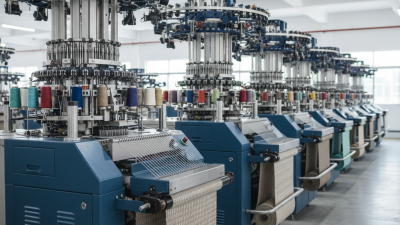
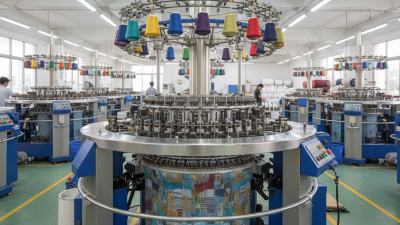
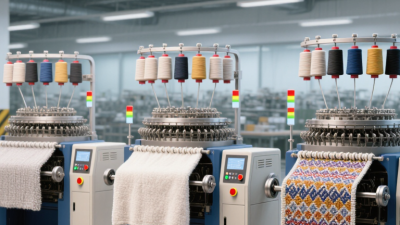
Used knitting machines should be defined by more than age or price. Reliable worldwide suppliers usually classify equipment by knitting type, gauge, diameter, and intended production use. Circular machines form tubes for socks, jerseys, underwear, and technical fabrics. Flat knitting machines produce shaped panels, collars, sweaters, and three-dimensional parts. Warp knitting machines create stable, continuous fabrics for sportswear, mesh, and industrial applications.
Gauge describes needle density, usually measured by needles per inch. A finer gauge creates lighter, smoother fabric, while a coarser gauge supports thicker yarns and heavier structures. Diameter matters mainly for circular machines. A small cylinder suits narrow tubular goods, while larger diameters produce wider fabric rolls. Buyers should confirm the actual needle bed or cylinder size. Records are sometimes unclear.
Production use changes the value of a used machine. A machine built for sample development may not withstand continuous factory output. Check its knitting speed, feeder count, patterning system, motor condition, and spare-part availability. Ask suppliers for maintenance records and recent operating videos. Inspect needle movement and fabric tension carefully. Small faults become expensive quickly. In my experience, refurbished machines can perform well, but “fully tested” does not always mean ready for every yarn. Buyers should test their own yarn, gauge, and fabric structure before final payment.
Rank Global Suppliers with Five Metrics: Price, Year, Condition, Support, and Parts
Comparing used knitting machine suppliers requires more than checking the lowest quoted price. I rank each supplier using five practical metrics: price, production year, machine condition, support, and parts availability. A low price can hide worn needles, noisy motors, or missing manuals. The best value usually comes from a balanced score, not a bargain offer.
Price receives attention, but year gives useful context. A newer machine may have better controls and fewer fatigue-related failures. Condition should be verified through running videos, stitch samples, service records, and photographs of the carriage. Ask whether the machine was stored in a dry facility. Rust changes the calculation quickly.
Support is tangible. Can technicians answer specific setup questions? Do they provide installation guidance and troubleshooting within a reasonable time? Parts decide downtime. Check stock for needles, belts, sensors, and electronic boards before payment.
In a global ranking, suppliers with fair pricing, recent models, tested machines, responsive technicians, and dependable parts networks deserve the highest tier. Suppliers with strong machines but weak documentation may sit in the middle. The lowest tier includes attractive prices with unclear testing or vague delivery terms.
My own scoring would weight condition and parts slightly higher than price. That choice is debatable. A small workshop may value affordability more. Before ranking, request a live demonstration and inspect the exact serial number. Supplier photos can be selective. Mine could be, too.
Compare Supplier Hubs in Japan, Germany, Italy, China, Turkey, and Taiwan
Used knitting machine supply is concentrated in distinct manufacturing and resale hubs. Japan is valued for careful maintenance, detailed manuals, and fine-gauge equipment. Buyers often find clean carriages and complete accessories there. Germany tends to offer robust engineering and useful workshop records. Older units may be heavy, but their frames can remain remarkably stable. Italy is often associated with machines for fashion sampling and textured fabrics. Documentation can vary between sellers, so evaluation may take longer.
China provides a broad selection across price levels, gauges, and production ages. Export packing is often practical, but machine condition requires close checking. Ask for operating videos, serial information, and clear photos of needle beds. Turkey serves buyers across Europe, the Middle East, and nearby textile markets. Its used inventory may include workshop equipment with visible signs of regular production. Taiwan is attractive for compact machines, electronic controls, and technically organized supply channels. Replacement compatibility still needs confirmation.
Do not judge a machine by appearance alone. Test the carriage, selector, punch mechanism, and tension system when possible. Check for rust between needles and inspect the power supply before shipping. A short knitted swatch can reveal more than a polished listing. I would also compare packing methods, manuals, spare parts, and seller response time. Some suppliers answer quickly but overlook small faults. That matters. Regional reputation helps, yet independent inspection remains safer than assumptions.
What Are the Top Used Knitting Machine Suppliers Worldwide? - Compare Supplier Hubs in Japan, Germany, Italy, China, Turkey, and Taiwan
| Supplier Hub |
Main Market Role |
Used Machine Categories Commonly Available |
Supply Depth |
Refurbishment Ecosystem |
Export Convenience |
Best Suited For |
| Japan |
Mature textile-machinery market with strong precision-engineering and knitwear production capabilities. |
Computerized flat knitting machines, circular knitting machines, hosiery machines, and sampling equipment. |
High |
High |
Good by sea; documentation is usually detailed. |
Buyers seeking precision, stable machine condition, and advanced programming functions. |
| Germany |
Engineering-led market serving technical textiles, industrial knitting, and high-specification production. |
Warp knitting machines, technical knitting systems, circular machines, and electronically controlled equipment. |
High |
Very high |
Excellent within Europe; strong road and rail access. |
Industrial users requiring technical documentation, inspection records, and engineering support. |
| Italy |
Fashion and luxury knitwear center with a strong network of specialist textile districts. |
Flat knitting machines, hosiery machines, fine-gauge equipment, and sample-development systems. |
High |
High |
Excellent within Europe; established freight and service networks. |
Fashion brands, sampling rooms, premium knitwear producers, and small-batch manufacturers. |
| China |
Large-scale textile manufacturing base with broad domestic demand and extensive machinery trading activity. |
Circular knitting machines, flat knitting machines, computerized systems, hosiery equipment, and auxiliary units. |
Very high |
Medium to high |
Strong ocean-freight coverage; inspection and export paperwork should be verified. |
Cost-sensitive buyers needing large quantities, replacement parts, or mixed machine lots. |
| Turkey |
Integrated textile and apparel manufacturing hub supplying European, Middle Eastern, and regional markets. |
Circular knitting machines, flat knitting machines, hosiery equipment, and garment-production support machinery. |
High |
Medium to high |
Very good for Europe by road; ports support international sea freight. |
European and nearby buyers seeking shorter delivery routes and production-ready equipment. |
| Taiwan |
Export-oriented machinery and textile manufacturing hub known for engineering capability and electronics integration. |
Circular knitting machines, computerized flat knitting machines, narrow-width systems, and electronic controls. |
High |
High |
Efficient by sea and air; island logistics require shipment planning. |
Export manufacturers seeking electronically controlled machines and reliable technical specifications. |
|
Comparison note: “Supply depth,” “refurbishment ecosystem,” and “export convenience” are qualitative market assessments rather than fixed rankings. Actual availability depends on machine age, gauge, working width, control system, maintenance history, inspection status, and destination-country import requirements.
|
Verify Machine Quality Using Serial Records, Test Runs, and ISO 9001 Checks
What Are the Top Used Knitting Machine Suppliers Worldwide?
A reliable supplier should provide the machine’s serial number before discussing price. Match it with the manufacturer’s plate, service invoices, and ownership records. Check whether the production year matches the control system and motor specifications. Missing records are not automatic proof of poor quality. They are a reason to slow down.
Request a documented test run using yarn similar to your planned production. Watch the needle beds, feeders, take-down rollers, and fabric edges. Ask for close-up videos showing start-up, speed changes, and emergency stops. Record noise, vibration, oil leakage, and error codes. A short demonstration can reveal more than polished photographs. I would still avoid trusting one test alone.
ISO’s Survey 2022 recorded 1,265,216 ISO 9001 certificates across 189 countries and economies. Certification does not guarantee a perfect used machine, but it indicates controlled quality procedures. Verify the certificate’s scope, validity, and issuing body. Also ask how the supplier handles inspection, calibration, packing, and after-sales complaints. ITMF’s International Textile Machinery Shipment Statistics separates machinery categories and regions, reminding buyers that market data does not prove individual machine condition. That distinction matters. My own evaluation would include an independent technician, although this adds cost and may delay delivery. A cheaper inspection can become an expensive lesson.
What Are the Top Used Knitting Machine Suppliers Worldwide?
Verification priority based on serial records, test runs, and ISO 9001 checks
This 100-point screening framework prioritizes traceable machine history and operational proof before supplier selection. Serial records confirm identity and maintenance history, test runs verify actual machine performance, and ISO 9001 checks evaluate the supplier’s documented quality-management process. The scores are verification weights, not rankings or claims about any specific company.
Calculate Total Cost from Machine Price, Freight, Duties, Installation, and Warranty
A used knitting machine can look inexpensive until the landed cost is calculated. Compare suppliers by total cost, not listing price. Add machine price, inland collection, ocean or air freight, insurance, import duties, taxes, installation, training, spare parts, and warranty support. The WTO reported a 1.2% decline in global merchandise trade volume during 2023, showing why freight assumptions deserve caution. UNCTAD also reports that maritime transport carries over 80% of world merchandise trade. Shipping delays can therefore affect production schedules and cash flow.
For example, a machine priced at $18,000 may require $2,400 for freight and insurance. Duties and taxes could add $3,600, while installation and testing may cost another $1,200. The practical total becomes $25,200 before unexpected repairs.
Request serial records, maintenance history, operating hours, needle-bed condition, and a video test using your yarn. ITMF’s International Textile Machinery Shipment Statistics also shows that machinery demand differs by region and machine category. Local technical support may matter more than a slightly lower price.
Tips:
Ask for a written landed-cost quotation. Confirm the customs classification before payment. Treat “fully inspected” carefully; inspection standards vary. Reserve 10–15% for repairs and consumables. My first estimate was too optimistic when I ignored electrical conversion and unloading equipment. That mistake is easy to repeat. A dependable supplier should explain warranty exclusions, response times, replacement-part availability, and who pays for return freight.