

Why Use a Scaffold Jack Base for Safe Construction?

Why Use a Scaffold Jack Base for Safe Construction?

A Scaffold Jack Base is a small component with a major structural responsibility. It transfers scaffold loads into the supporting surface. It also helps workers level frames on uneven ground. Without proper adjustment, one leg may carry excessive pressure. That imbalance can create movement, tilting, or progressive instability.

OSHA reports that approximately 2.3 million construction workers use scaffolds regularly. Its scaffold safety guidance also identifies about 4,500 injuries and 50 deaths each year in the United States. These figures show why base stability deserves careful attention. A correctly selected jack base supports safer erection, inspection, and daily use.

David E. MacCollum, a recognized construction-safety engineer and scaffold author, stated, “A scaffold is only as safe as its foundation.” The wording is simple. The responsibility is not. A jack base must sit on a sound sole board, not loose soil, broken concrete, or stacked materials. Its adjustment screw should remain within the manufacturer’s permitted range. Locking devices must engage fully.

The UK Health and Safety Executive also emphasizes competent assembly, inspection, and suitable ground conditions for temporary work platforms. Those principles apply across many construction environments. Still, a jack base cannot repair poor design or careless loading. That point is easy to overlook.

Before each shift, workers should check settlement, bent threads, missing pins, damaged plates, and visible movement. A short inspection can reveal a serious problem. Safer scaffolding begins at ground level. Sometimes, the smallest component deserves the closest attention.
Why Use a Scaffold Jack Base for Safe Construction?

What Is a Scaffold Jack Base and How Does It Work?

Why Use a Scaffold Jack Base for Safe Construction?

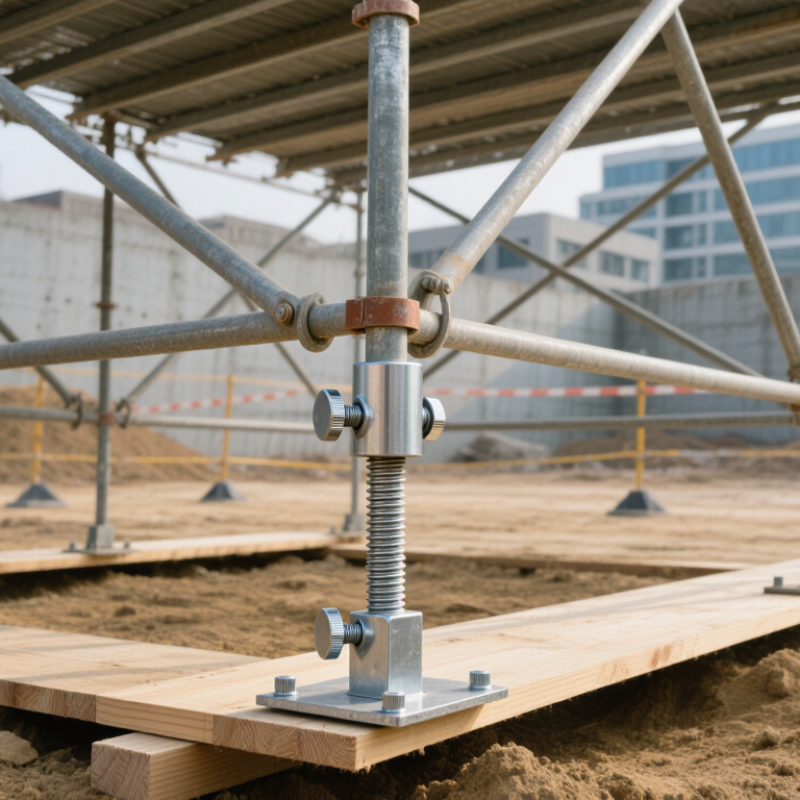
A scaffold jack base is an adjustable steel component installed beneath a scaffold standard. Its threaded stem raises or lowers the support point. This helps workers level the scaffold on uneven ground. The base plate spreads the load across a sole board or firm surface. The result is better contact, improved stability, and fewer rocking movements underfoot.

The adjustment is practical but limited. Workers turn the jack nut, check the level, and confirm every standard remains plumb. A small error at ground level can become a noticeable tilt several lifts above. OSHA reports that scaffold-related incidents cause about 4,500 injuries and 50 deaths annually in the United States. That figure makes basic setup details difficult to dismiss. A jack base cannot correct weak soil, missing bracing, or overloaded platforms. It only supports a properly designed scaffold system.

On active sites, threads often collect mud, mortar, and metal dust. Cleaning them matters. The base should be inspected for bent plates, damaged threads, corrosion, and uneven loading. OSHA guidance also requires scaffold components to support their own weight and at least four times the maximum intended load. Crews should follow the scaffold designer’s limits, not guess from available adjustment space. The part we still get wrong is simple: more height is not always more safety. A level platform can still be unstable when its foundation is poor.

Key Components and Load-Bearing Functions of a Jack Base

Why Use a Scaffold Jack Base for Safe Construction?

Key Components and Load-Bearing Functions of a Jack Base

A scaffold jack base is more than an adjustable foot. It creates a controlled path for transferring scaffold loads into the supporting surface. The base plate spreads pressure across a wider area. This reduces point loading on concrete, timber, or other approved surfaces. The threaded stem provides height adjustment. Its heavy steel threads must remain clean and undamaged.

The adjustment nut carries much of the working load. It should turn smoothly and lock firmly at the selected height. A swivel head can help the scaffold follow uneven ground, but it cannot correct a weak foundation. Some jack bases also include locking pins or retaining features. These parts help prevent unwanted movement during assembly and use.

Load moves from the platform into the frames, then through the jack base and supporting surface. Every connection matters. If the stem is extended too far, its stability can decrease. If the base plate sits on debris, the load may become uneven. A level check, visual inspection, and confirmation of the manufacturer’s rated capacity are practical controls. Qualified workers should inspect the setup before loading it.

A small mistake can matter.

In real construction conditions, mud, rushed adjustments, and damaged threads are common concerns. The safest choice is not always the fastest one. I would also question any setup that feels unstable, even when it appears correctly assembled. Local regulations, site procedures, and competent-person inspections should guide final decisions.

How a Scaffold Jack Base Improves Stability and Leveling

Why Use a Scaffold Jack Base for Safe Construction?

A scaffold jack base improves stability by creating a firm, adjustable connection between the scaffold and the ground. Its threaded stem allows workers to correct uneven surfaces without forcing the frame into a tilted position. Small adjustments matter. A few millimeters can affect the vertical alignment of several connected bays. The base should sit on a suitable sole board or load-distribution surface, especially on soil, asphalt, or weak flooring. This spreads pressure and reduces settlement.

OSHA’s scaffold safety guidance estimates that scaffold-related accidents cause about 4,500 injuries and 50 deaths each year in the United States. Proper leveling cannot remove every hazard, but it can reduce rocking, uneven loading, and difficulty fitting braces. A competent person should inspect the jack base, threads, locking hardware, and supporting surface before use. The scaffold must remain plumb after loading, not only during assembly. That detail is often missed.

In practical site work, crews may overextend a jack to save time. That decision deserves questioning. Excessive extension can reduce stability and leave less thread engagement. Follow the manufacturer’s stated limits and the applicable safety standard. Check the base again after rain, vibration, or nearby excavation. A level scaffold feels solid underfoot. That feeling alone is not proof. Records, measurements, and repeated inspections provide better evidence.

Why Use a Scaffold Jack Base for Safe Construction? — How a Scaffold Jack Base Improves Stability and Leveling
Data Dimension Typical or Required Value Safety and Stability Benefit Inspection or Use Requirement
Base plate footprint Common adjustable-base footprints are approximately 150–200 mm square; the exact size depends on the scaffold system. A larger bearing area distributes the load over a wider section of the supporting surface and reduces localized settlement. Use a base plate designed for the scaffold system. Do not substitute undersized plates or improvised materials.
Vertical adjustment range Many screw jack bases provide approximately 400–600 mm of adjustment, although the approved range varies by product and system. Allows uneven ground or floor levels to be corrected while keeping standards vertical and working platforms level. Keep the screw extension within the marked or specified limit. Excessive extension can reduce stability and load capacity.
Load-bearing foundation The base must stand on a firm, level, and adequately supported foundation capable of carrying the scaffold load. Prevents sinking, tilting, differential settlement, and sudden changes in scaffold geometry. Use suitable sole boards or other engineered foundation measures where the ground or surface may deform. Do not place bases on loose rubble, bricks, boxes, or barrels.
Vertical alignment Standards should be kept plumb; the permissible deviation must follow the applicable scaffold standard, design, or manufacturer instructions. Plumb standards transfer loads more directly and reduce unintended bending and lateral forces. Check alignment after initial setup, after adjustment, and whenever the scaffold is altered, impacted, or exposed to severe weather.
Scaffold design capacity Under OSHA requirements, a scaffold and its components must support their own weight plus at least 4 times the maximum intended load. Provides a required safety factor against structural failure when the scaffold is properly designed, erected, and used. The jack base does not increase the scaffold’s rated capacity by itself. Follow the engineered design and the component’s stated safe working load.
Base restraint and movement control Adjustable bases should be secured within the scaffold assembly using the required braces, frames, couplers, and locking arrangements. Reduces sliding, racking, sway, and unintended movement during access, loading, and work activities. Install all required diagonal, horizontal, and longitudinal bracing. Never rely on the screw jack alone to prevent scaffold movement.
Thread and locking condition The threaded spindle should operate smoothly, with the nut, collar, and retaining components fully engaged and undamaged. Maintains reliable height adjustment and helps prevent sudden loss of support caused by damaged or partially engaged threads. Remove from service any jack with bent threads, severe corrosion, cracks, missing parts, or a seized adjustment nut.
Material and corrosion protection Scaffold jack bases are commonly manufactured from structural steel and may use galvanized or coated surfaces for corrosion resistance. Maintains section strength and thread performance in outdoor, damp, or chemically exposed environments. Inspect for corrosion that reduces metal thickness or interferes with adjustment. Clean threads only with approved methods and do not weld or modify the jack without engineering approval.
Leveling verification Check platform level in both longitudinal and transverse directions using a calibrated level or approved surveying method. Reduces trip hazards, uneven loading, rolling-object movement, and additional stress on guardrails and connections. Recheck after loading, rain, ground disturbance, relocation, or any adjustment to the jack bases.
Inspection frequency Inspect before each work shift and after any event that could affect structural integrity, such as impact, alteration, or severe weather. Helps identify settlement, loosened components, damaged threads, missing braces, and changes in alignment before use. Inspection should be completed by a competent person in accordance with applicable regulations and the scaffold manufacturer’s instructions.
Applicable guidance Common references include OSHA 29 CFR 1926.451 and EN 12811-1, where applicable to the project location and scaffold system. Provides recognized requirements for strength, stability, access, foundations, and safe use. Apply the regulations and standards required by the local authority. Where requirements differ, use the stricter applicable requirement unless formally engineered otherwise.

Steps for Selecting and Installing a Scaffold Jack Base

A scaffold jack base helps distribute loads and fine-tune scaffold height, but selection must match the site. Check the required load capacity, adjustable range, thread condition, and base-plate dimensions. Confirm compatibility with the scaffold frame and follow the supplier’s instructions. Measure the ground before delivery. Soft soil, sloped concrete, and hidden drains can change the installation plan. Use firm sole boards where needed, and keep them fully supported. Never rely on a jack base to correct badly uneven ground.

During installation, clear loose materials and place each sole board on stable ground. Set the jack base centrally, then position the scaffold frame over the base plate. Adjust the threaded collar gradually until the frame is level and plumb. Lock every adjustment securely. Check that the base plate remains flat and that no leg is carrying an unusual load. A small spirit level is useful here. Recheck the scaffold after nearby work, rain, or movement.

A practical inspection should include bent threads, damaged welds, missing pins, and excessive corrosion. I have seen crews focus on height adjustment and overlook timber crushing beneath a base. That mistake is easy to repeat. It deserves attention. A competent person should verify the completed setup against the work plan and applicable site rules. Marking each inspected base can improve traceability, although labels alone do not replace physical checks. Reinspect before access begins, after alteration, and whenever the ground condition changes.

Safety Checks and Maintenance Practices for Continued Use

Why Use a Scaffold Jack Base for Safe Construction?

A scaffold jack base helps level a scaffold on uneven ground. It also spreads adjustment through a stable supporting surface. However, it cannot correct soft soil, damaged sole boards, or excessive loading. A level scaffold can still be unsafe.

Safety checks must happen before each shift, after relocation, and after severe weather. Inspect the threaded stem for bends, cracks, heavy corrosion, and blocked threads. Confirm the base plate sits fully on a sound sole board. Check that lock nuts are tight and adjustment remains within the manufacturer’s stated range. OSHA’s scaffolding eTool estimates that about 2.3 million construction workers use scaffolds, with roughly 4,500 injuries and 50 deaths linked to scaffold incidents each year. These figures make small defects worth recording. Under OSHA 29 CFR 1926.451, competent-person inspections are essential. Local rules may add requirements.

Tips: Keep a simple inspection log. Record the date, location, weather, defects, and corrective action. Clean mud from threads before adjustment. Never heat, weld, or force a damaged jack base. Remove questionable parts from service. Store bases upright and dry, away from impact damage. A rushed check can look complete. It is not. Maintenance teams should review repeated problems, because recurring corrosion or settlement may reveal poor drainage or an unsuitable foundation.

Close
Go top
Translate »