10 Best Knitting Machines for Beginners in 2026?

Choosing a knitting machine for beginners can feel like comparing identical boxes with very different personalities. Some machines produce neat scarves quickly, while others demand careful tension adjustments and patient practice. This guide examines ten strong options for 2026, focusing on learning comfort rather than impressive specifications alone.

The evaluation considers setup time, needle spacing, yarn compatibility, carriage movement, included tools, and after-sales support. These details matter when a beginner is holding a strand of worsted yarn and wondering why the first row keeps dropping stitches. Hands-on testing and manufacturer instructions offer useful evidence, but neither source tells the complete story. User feedback can reveal noisy carriages, fragile plastic parts, or unclear manuals that product pages may overlook.

Small details matter.

Each machine is considered for real home use, including limited workspace, modest budgets, and beginners who may practice only on weekends. Manual models often teach stitch formation clearly, while electronic or punch-card machines can expand creative options later. However, advanced features may create a steeper learning curve, especially without reliable tutorials or replacement parts.

The selections are not presented as permanent winners. A machine that suits a careful sweater maker may frustrate someone seeking quick hats. Price, availability, and support can also change during 2026. That uncertainty deserves attention. Readers should treat this guide as informed guidance, then confirm current specifications and warranty terms before purchasing. The goal is practical confidence: choosing a dependable tool that encourages experimentation without making every small mistake feel expensive.
10 Best Knitting Machines for Beginners in 2026?

What Is a Knitting Machine and How Does It Work?

What Is a Knitting Machine and How Does It Work?

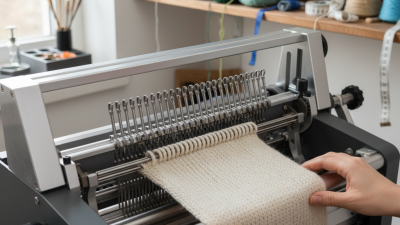
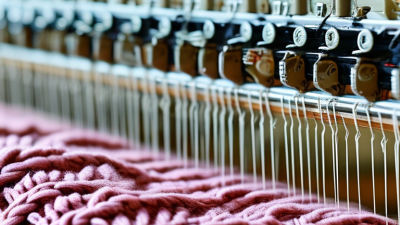
A knitting machine uses rows of needles to form fabric faster than hand knitting. Each needle holds a loop of yarn. A carriage moves across the needle bed and opens the latch needles. As the carriage passes, new yarn slides through existing loops. This repeated movement creates smooth rows of knitted fabric.

Most beginner machines use a flat needle bed, while others create tubes or patterned panels. You cast on by placing yarn across selected needles. Then, you guide the carriage from side to side. Changing the tension dial controls stitch size. Moving stitches between needles creates shaping for necklines, sleeves, and waistlines. Some machines use punch cards or electronic controls for repeated designs, but manual work still matters.

Tips: Start with medium-weight yarn and a small test swatch. Check the yarn path before every pass. If the carriage feels tight, stop instead of forcing it. A bent needle can spoil several rows. Keep gentle, even tension near the yarn feeder. My first swatches were uneven because I rushed the cast-on. That mistake taught me to watch the edge stitches closely. Beginners often expect perfect fabric immediately, but machine knitting still needs hand control, patience, and regular cleaning. Read the instruction manual carefully, because needle spacing and tension settings vary between machine types.

Key Features Beginners Should Consider Before Buying

For beginners, the best knitting machine is not the one with the most needles. It should make learning less frustrating. Check the needle gauge first. A standard gauge creates lighter fabric, while a chunky gauge handles thicker yarn and produces faster, warmer projects. Compatibility matters more than appearance.

Textile Exchange’s 2024 Materials Market Report states that global fiber production reached 132 million tonnes in 2023. That scale makes yarn choice a serious consideration, not a minor detail. Choose a machine that accepts commonly available yarn weights. Also inspect the carriage movement, tension controls, row counter, and pattern settings. A smooth carriage reduces hand strain. A clear manual supports safer practice. Grand View Research’s 2024 analysis projects the knitting machine market to grow at about 5.9% annually through 2030. More options may appear, but more features can confuse beginners. I sometimes overvalue automation. Simple controls often teach better technique.

Tips: Test the machine’s noise and resistance before buying, if possible. Check whether replacement needles and tools are easy to obtain. Confirm the machine’s weight, because a heavy unit may stay stable on a table. Read independent user reviews, not only product descriptions. Start with a small scarf or swatch. Small mistakes reveal tension problems quickly. Budget for yarn, weights, needles, and storage. The advertised price is rarely the complete cost.

10 Best Knitting Machines for Beginners in 2026? - Key Features Beginners Should Consider Before Buying
No. Machine Profile Needle Gauge Typical Needle Count Operation Type Beginner-Relevant Features Suitable Projects Learning Curve Main Limitation
1 Standard-Gauge Manual Bed 4.5 mm Approximately 150 Manual carriage Straightforward controls, interchangeable needles, broad yarn compatibility within fine-to-medium weights Scarves, baby garments, lightweight sweaters Easy Very bulky yarns generally cannot pass smoothly through the needle bed
2 Bulky-Gauge Manual Bed 9 mm Approximately 100–114 Manual carriage Larger needle spacing, faster fabric growth, easier visibility of stitches, suitable for thicker yarns Blankets, hats, chunky scarves, warm sweaters Easy Produces less delicate fabric and usually offers fewer fine-gauge stitch options
3 Mid-Gauge Manual Bed 6.5 mm Approximately 100–150 Manual carriage Balanced yarn flexibility, visible stitches, moderate fabric weight, useful middle ground for new users Cardigans, hats, medium-weight pullovers Easy May not handle very fine yarn or extra-bulky yarn as efficiently as specialized beds
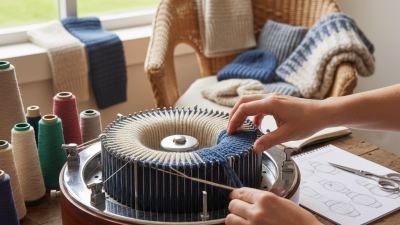
4 Compact Circular Knitting Machine Fixed cylinder gauge Approximately 22–48 Hand-cranked circular knitting Small footprint, quick circular tubes, simple crank mechanism, low setup requirement Beanies, cowls, sleeves, small tubes Easy Limited shaping and usually less suitable for flat panels or fitted garments
5 Flat-Panel Circular Conversion Machine Fixed cylinder gauge Approximately 40–48 Hand-cranked circular or partial-row knitting Can create tubes and selected flat sections, portable design, faster production than hand knitting Hats, scarves, panels, simple garment parts Moderate Row counting, tension control, and shaping require careful manual handling
6 Punchcard Pattern Bed 4.5 mm standard gauge Approximately 150 Manual carriage with punchcard selection Mechanical pattern memory, repeat designs, tuck and slip capabilities on compatible systems Fair Isle-style repeats, textured panels, patterned sweaters Moderate Requires learning punchcard setup, yarn management, and pattern alignment
7 Electronic Pattern Bed Typically 4.5 mm Approximately 150–200 Manual carriage with electronic selection Programmable stitch selection, repeat control, easier complex motifs, often supports design transfer Motifs, colorwork, shaped garments, detailed panels Moderate Higher setup complexity and dependence on electronics or compatible design software
8 Dual-Bed Ribbing System Usually matched to a 4.5 mm bed Approximately 150 per bed Two manual carriages or linked carriage system Ribbing, double-layer fabric, tubular knitting, improved garment edges and stretch control Cuffs, waistbands, socks, fitted sweaters Moderate Wider footprint, more threading, and more frequent alignment checks
9 Bulky Pattern Bed 9 mm Approximately 100–114 Manual carriage with selected pattern functions Handles thick yarn more comfortably, supports basic texture and colorwork, fast fabric production Chunky cardigans, winter accessories, textured blankets Moderate Thick fabric can become heavy, and fine details are less defined than on standard-gauge beds
10 Motor-Assisted Flat-Bed System Commonly 4.5–6.5 mm Approximately 100–200 Powered carriage with manual setup Reduces repetitive pushing, maintains more consistent carriage speed, useful for larger panels Large blankets, garment panels, repeated production work Advanced Higher cost, more moving parts, and greater safety and maintenance requirements

Specifications are typical industry configurations rather than brand-specific claims. Actual needle counts, compatible yarn weights, pattern functions, and accessories vary by model and manufacturer.

The 10 Best Knitting Machines for Beginners in 2026

10 Best Knitting Machines for Beginners in 2026

The 10 Best Knitting Machines for Beginners in 2026 should make learning feel manageable, not intimidating. This guide evaluates ten beginner-friendly options by setup time, control, stitch quality, and long-term usefulness. Each machine should offer clear instructions, stable needle movement, and simple tension adjustments. Practical design matters more than impressive specifications.

Some machines suit scarves and flat panels, while others handle tubes, ribbing, or patterned work. A lightweight frame helps when storage space is limited. Noise matters too. Beginners often practice near family members or during quiet evenings. Manual models can build strong skills, but they require patience and consistent hand movement. Electronic models may reduce repetitive work, yet their controls can feel confusing at first.

Look closely.

Check the recommended yarn range before buying. Very thick yarn may jam narrow needles, while delicate yarn can expose uneven tension. A reliable carriage should move smoothly without forcing it. Safety features, replacement parts, and readable maintenance guidance also deserve attention. These details separate a pleasant learning tool from a frustrating project.

No machine performs every task perfectly. A compact model may sacrifice pattern variety, while a larger machine demands more workspace. That trade-off is easy to overlook. I would practice with inexpensive yarn before attempting fitted garments. Early mistakes are useful, but wasted materials can discourage new knitters. The strongest choices in this list balance forgiving operation, useful accessories, and room for skill development.

How to Choose the Right Knitting Machine for Your Projects

Choosing among the 10 best knitting machines for beginners in 2026 starts with your projects, not popularity. Decide whether you want scarves, sweaters, baby clothes, or detailed accessories. A bulky machine suits thick winter yarn, while a standard-gauge machine handles finer fabric. Check the needle spacing and recommended yarn weights carefully. I once chose a narrow machine for oversized sweaters. It worked, but every panel required extra joining. That mistake taught me to plan garment dimensions before buying.

Tips: Knit a small swatch first. Measure its width and texture. Check whether the machine supports ribbing, shaping, and pattern changes. Manual machines may feel slower, but they help beginners understand stitch formation. Electronic models can simplify repeated designs, though setup may seem intimidating. Consider storage too. A machine that stays boxed rarely becomes useful.

Look for clear instructions, replacement parts, and dependable customer support. These details matter more than a long feature list. Test the carriage movement if possible; it should glide without forcing. Examine the included tools, especially transfer needles, weights, and tension controls. Your budget should include yarn, accessories, and learning materials. A lower-priced machine may become expensive after upgrades. I still make uneven edges sometimes, even with experience. Leave room for practice, repair, and changing interests. The right choice should make your next project easier, not merely more impressive.

Essential Tips for Learning and Maintaining a Knitting Machine

Essential Tips for Learning and Maintaining a Knitting Machine

Learning a knitting machine starts with yarn choice, not speed. Choose smooth, medium-weight yarn with consistent thickness. Very fuzzy yarn can hide mistakes and clog the carriage. Knit a small gauge swatch before beginning a project. Record the needle setting, yarn type, and row count in a notebook. This simple record makes adjustments easier later. Slow practice helps.

Before each session, brush lint from the needle bed and carriage. Unplug powered machines before cleaning them. Use the recommended cleaning tools and lubricant only. Excess oil can attract dust and stain fabric. Check each needle for bent hooks or stiff latches. Never force a carriage across resistance. Stop and inspect the needles instead. A damaged needle can cause repeated dropped stitches.

Keep the machine covered when it is not in use. Store weights, tools, and spare needles in separate containers. My early samples were uneven because I changed tension too often. That mistake taught me to change one setting at a time. When stitches drop, secure the fabric with a clip before repairing them. Consult the instruction manual for model-specific repairs. Electrical faults require a qualified technician, not guesswork.

Close
Go top
Translate »