Choosing a jacquard knitting machine manufacturer in China involves more than comparing prices or catalog photos. The right supplier should understand your fabric goals, production volume, yarn types, and required pattern complexity. A machine that looks suitable on paper may not perform as expected with your yarn or workflow. Test carefully.
This guide introduces practical ways to assess manufacturers, from machine specifications to after-sales support. Compare gauge options, needle arrangements, pattern-control systems, knitting speed, and the fabrics produced during a sample run. Ask for clear machine demonstrations and detailed technical documents. Where possible, review customer references and inspect the factory or arrange an independent assessment.
Reliable suppliers should explain maintenance needs, spare-parts availability, operator training, and service response times. These details matter when a machine stops during a production run. Check what is included in the quotation, such as installation support, packing, and warranty terms. Do not treat a polished brochure as proof of production quality.
There is no perfect shortlist. Manufacturer capabilities and service quality can vary, and online information may be incomplete or outdated. This article offers a starting point, not a substitute for direct verification. By asking specific questions and comparing evidence, buyers can identify Chinese manufacturers that better fit their technical requirements, budget, and long-term production plans.
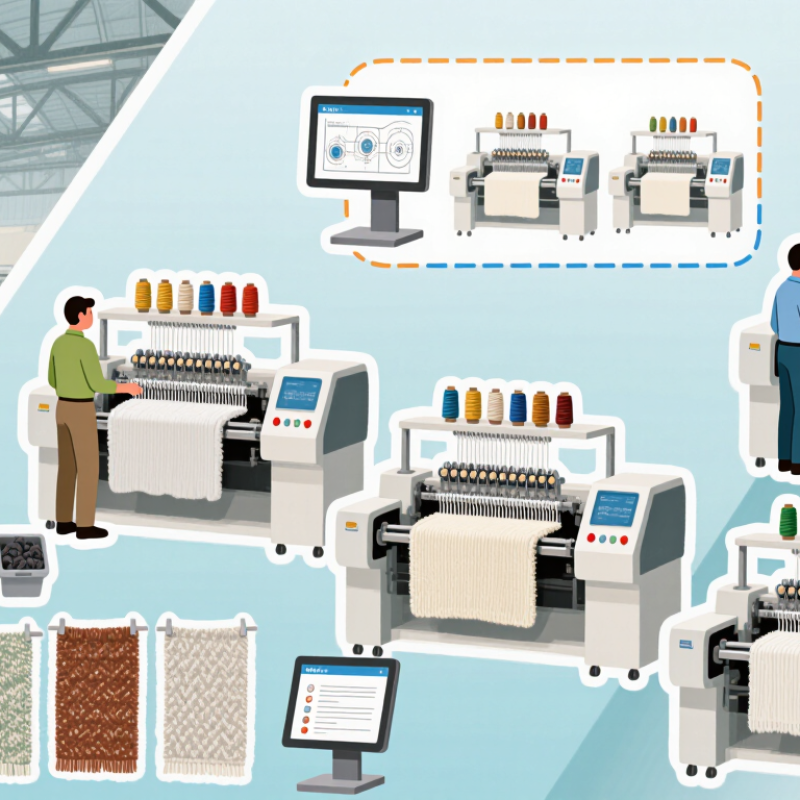
A jacquard knitting machine controls which needles knit, tuck, or miss at specific points in a pattern. This selective action creates motifs, color blocks, and textured structures directly in the fabric. Unlike a printed design, the pattern is formed through the placement of yarn loops. The machine’s gauge, yarn feeders, and programming all affect the finished result. Small details count.
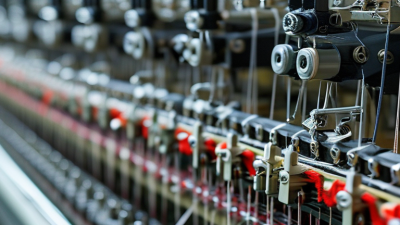
These machines are used to make patterned sweaters, sportswear, scarves, upholstery fabric, and some home textiles. On a production floor, operators may check yarn tension, needle condition, and fabric take-down during a run. Uneven tension can distort a motif or create visible stripes. A digital preview helps, but it cannot always reveal how a yarn will behave under real machine settings.
Jacquard knitting is useful when a design needs repeatable detail without adding a separate decorative layer. It can also combine different stitch structures within one piece of fabric. That flexibility comes with trade-offs: complex patterns may require careful sampling and slower adjustments. A pattern that looks balanced on a screen may feel too dense or stiff after knitting. Testing a small swatch first is practical, though even a good swatch cannot predict every production variation.
Best Jacquard Knitting Machine Manufacturers in China?
Assessing a manufacturer begins with the machine’s intended work, not a glossy catalogue. Specify fabric type, yarn range, gauge, working width, and expected production speed. Then ask how the machine handles detailed patterns and frequent design changes. Clear answers matter. Vague promises do not.
Request a sample knitted with your yarn and pattern file. Inspect its reverse side, edge consistency, stitch definition, and any dropped or uneven loops. Ask for a live demonstration, and watch how operators load a pattern, adjust tension, and respond to an error. These small details reveal more than a polished showroom. A test on different yarn may expose problems, too.
Check whether technical documents list machine specifications, maintenance intervals, spare parts, and training support. Ask how quickly common replacement components can be supplied, and speak with existing customers about service after installation. If possible, visit the factory and observe assembly and quality checks. A neat workshop is useful evidence, but not proof of consistent performance. It is easy to focus on price or impressive output figures; I would still leave room for uncertainty. No checklist catches everything. Compare the answers against your actual production needs, and note where claims remain unverified.
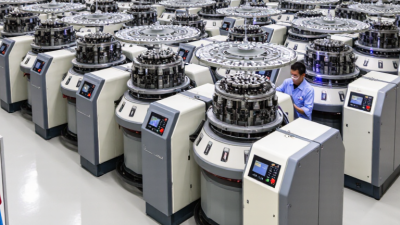
China’s jacquard knitting machine manufacturers often focus on different production needs rather than offering identical equipment. Some specialize in electronic flat knitting machines for sweaters, collars, and shaped panels. These machines can produce detailed motifs while reducing some manual pattern changes. Others focus on circular knitting equipment for tubular fabrics, sportswear, and larger fabric runs. The right choice depends on the material, gauge, and output required.
A further group serves narrower applications, such as sock knitting or computerized machines for small-batch design work. Their specialties may include multi-color pattern control, simpler programming interfaces, or machine configurations for specific yarn types. Details matter. A fabric swatch can reveal missed floats, uneven tension, or pattern distortion more clearly than a sales specification. Ask whether the sample was knitted on the proposed machine, using comparable yarn and settings.
Supplier descriptions can be broad, so verify capabilities through technical documents, operating demonstrations, and service arrangements. Check the available gauge range, patterning system, spare-part lead times, and operator training. These details affect production after installation. A capable machine may still be a poor fit if local technicians cannot support it. It is easy to overvalue maximum speed; stable stitch quality and changeover time may matter more. Some claims are difficult to compare directly, so buyers should request measurable results.
When comparing jacquard knitting machine manufacturers in China, examine how their technology performs with your intended yarn and fabric structure. Ask for a live demonstration using a pattern file similar to your own. Check needle selection, gauge options, pattern-software compatibility, and stitch consistency at production speed. A sample swatch can look excellent, yet reveal little about performance across a full shift. Ask for proof.
Customization should match real production needs, not just a sales checklist. Discuss working width, yarn feeders, control settings, and whether technicians can help refine a sample after delivery. For quality checks, request inspection records and observe a machine running; listen for irregular knocks and look for uneven tension in the fabric. Details matter. After-sales support deserves equal scrutiny: confirm installation and operator training, response hours, remote troubleshooting, and typical spare-parts lead times. Request these details in writing. I would still verify support arrangements with current customers where possible, since a clear service promise can be harder to assess than a machine on the factory floor. A short trial run may expose practical issues that brochures miss.
When comparing jacquard knitting machine manufacturers in China, start with your fabric, not the machine’s headline speed. List the yarn types, gauge, usable width, pattern repeat, and monthly output you actually need. A manufacturer should explain how its machine handles your sample fabric, including floats, loop length, and changes between patterns. Ask for a trial using your own yarn. Watch the fabric come off the machine, then inspect the back, edges, and repeat consistency. Small defects matter.
Material choice affects production decisions. Textile Exchange’s Materials Market Report 2024 estimates that global fiber production reached 124 million tonnes in 2023, with polyester accounting for 57 percent. This broad market data is not a machine-sizing guide, but it underlines why suppliers should demonstrate stable performance with the fibers you plan to use. Request measured sample results, not only catalogue specifications. Check needle and sinker availability, software training, spare-part lead times, and the service response process. Ask who handles troubleshooting after installation, and how quickly replacement parts can arrive at your factory.
Then compare total operating needs. Review power consumption, operator training, maintenance intervals, and the floor space required for the complete line. Ask for a written acceptance test with clear limits for fabric defects and production speed. Visit the factory if possible, and speak with a customer running a similar gauge and pattern range. A polished demonstration is useful, but it may not reflect a full shift. I would not treat one successful sample as proof. Real production is less tidy.
| Selection Dimension | What to Match to Your Production | Evidence to Request from the Manufacturer | Why It Matters |
|---|---|---|---|
| Machine type | Choose circular or flat knitting according to the product: circular machines are commonly used for tubular fabrics, while flat machines are suited to shaped panels and knitted components. | A demonstration using a fabric or garment component similar to your intended product. | Machine type affects fabric construction, product format, workflow, and downstream finishing. |
| Jacquard capability | Confirm the required pattern structures, color changes, design complexity, and whether the machine supports the specific jacquard method needed for your fabric. | A sample swatch made from your pattern file, plus a written description of supported pattern functions and limitations. | “Jacquard” covers different machine configurations; the term alone does not confirm that a machine can produce a particular design. |
| Gauge and needle setup | Select a gauge and needle configuration compatible with the yarn, fabric weight, stitch definition, and end use specified in your product brief. | Machine specifications, available needle options, and a trial using the yarn and stitch structure you plan to run. | Gauge influences the spacing of the needles and the fabrics a machine can produce; suitability depends on the complete yarn and fabric setup. |
| Working width or cylinder diameter | For flat machines, compare working width with the dimensions of your panels. For circular machines, compare cylinder diameter and usable knitting area with the required fabric tube and production plan. | A machine drawing or specification sheet showing the relevant dimensions and usable knitting area. | A suitable size helps avoid unnecessary fabric handling, layout compromises, or limits on product dimensions. |
| Yarn compatibility | Check compatibility with your actual fiber types, yarn counts, ply, elasticity, and feeding method rather than relying on a general yarn list. | A production trial with your yarn, including notes on yarn feeding, breakage, fabric appearance, and machine adjustments. | Yarn behavior can affect stitch formation, fabric quality, machine stability, and achievable production efficiency. |
| Output and operating conditions | Set output expectations for your specific pattern, yarn, gauge, and quality standard. Include setup time, changeovers, operator requirements, and expected operating hours. | A measured acceptance run using an agreed test pattern and written conditions for the reported output. | Production speed varies with machine configuration and knitting conditions; a headline speed alone is not a reliable output forecast. |
| Fabric quality and repeatability | Define acceptable limits for pattern alignment, stitch consistency, fabric dimensions, defects, and color or structure repeatability. | Samples from a sustained trial, documented inspection criteria, and a written machine acceptance checklist. | A sample made once may not show how consistently the machine performs during a production run. |
| Pattern software and file workflow | Confirm supported design software, file formats, pattern editing functions, operator training, and compatibility with your existing workflow. | A live file-import and knitting demonstration using a representative production pattern. | Software compatibility and ease of editing can affect design transfer, setup time, and production flexibility. |
| Service, spare parts, and training | Evaluate installation support, operator and maintenance training, troubleshooting response, warranty terms, and access to commonly needed spare parts. | A written service plan, warranty document, spare-parts list, and named support channels with response expectations. | Service availability can influence downtime, maintenance planning, and the time needed to bring a machine into production. |
| Total ownership cost | Compare the complete cost of purchase, shipping, installation, training, tooling, spare parts, maintenance, and any required software. | An itemized quotation that states inclusions, exclusions, payment terms, delivery terms, and commissioning costs. | A comparable total-cost view is more useful than comparing machine prices alone. |
| Factory verification and acceptance | Before ordering, agree on inspection steps, machine configuration, trial materials, acceptance criteria, and documentation to be supplied. | A pre-shipment inspection or witnessed trial, configuration record, operating manuals, and signed acceptance results. | Clear written criteria help confirm that the delivered machine matches the production requirements agreed before purchase. |