China Top 10 Machine and Parts Suppliers for Global Buyers?

Choosing reliable Chinese suppliers can shape a project’s cost, performance, and delivery schedule. This guide examines China’s top 10 machine and parts suppliers for global buyers. It focuses on manufacturers with practical export experience, documented capabilities, and consistent customer communication.

The selection considers product range, machining accuracy, factory capacity, quality systems, and international support. It also reviews certifications, inspection procedures, lead times, and after-sales service. Buyers can expect examples involving CNC components, industrial machinery, replacement parts, automation equipment, and custom assemblies. Clear specifications matter. So does realistic communication.

No list is perfect. Supplier rankings can change as markets, technologies, and management teams develop. A strong website does not always prove strong production. Buyers should request drawings, material certificates, sample reports, and recent references before placing substantial orders. Factory audits may reveal details that online research misses, such as measuring equipment, storage conditions, and packaging discipline.

The featured companies represent different strengths rather than identical business models. Some may serve high-volume orders, while others perform better with complex, low-volume components. Price alone can hide tooling fees, inspection costs, shipping risks, or maintenance concerns. That deserves attention. By comparing evidence instead of promises, global buyers can create a more dependable shortlist and negotiate with greater confidence.
China Top 10 Machine and Parts Suppliers for Global Buyers?

China’s Machine and Parts Manufacturing Industry Overview

China’s machine and parts manufacturing industry spans metalworking, packaging, construction, agricultural, and industrial automation equipment. Its supply network connects steel mills, casting workshops, machining plants, electronics suppliers, and export warehouses.

This structure supports flexible production, especially for buyers needing customized dimensions or moderate volumes. Common processes include CNC turning, milling, stamping, forging, welding, heat treatment, and surface finishing.

Factories often combine digital production records with experienced operators who inspect critical stages manually. That balance matters.

Material traceability is becoming more important. Buyers can request mill certificates, inspection reports, process drawings, and sample approval before mass production.

In practice, quality varies between suppliers, even within the same industrial cluster. A polished catalog never replaces a verified production audit.

Export-ready manufacturers usually understand international drawings, tolerance systems, packaging requirements, and documentation procedures.

Experienced buyers compare equipment capacity, inspection tools, production records, and after-sales communication before signing contracts. Small details matter.

A minor drawing ambiguity can create expensive rework, delayed shipments, or parts that fail during assembly. Independent inspections can check dimensions, hardness, surface quality, labeling, and packing before dispatch.

Reliable suppliers also explain limitations instead of promising every specification without evidence. No system is flawless.

Even strong factories may face material shortages, overloaded schedules, or inconsistent subcontracting. Buyers should therefore use clear specifications, approved samples, staged payments, and measurable acceptance standards.

Regular communication with engineers often reveals risks earlier than sales discussions. This industry remains capable, but careful verification is still necessary.

Key Criteria for Selecting Chinese Suppliers

Selecting a Chinese machine and parts supplier requires more than comparing quotations. China Customs reported machinery and electrical product exports above USD 2 trillion in 2023. Scale is impressive, but it does not guarantee stable quality. Global buyers should verify production experience, engineering depth, material traceability, and after-sales capacity.

Start with evidence. Request recent inspection records, process flow charts, calibration certificates, and customer references from similar industries. The ISO Survey 2022 recorded more than one million ISO 9001 certificates in China, yet certification alone proves little. Audit how workers control dimensions, surface finish, and batch changes. Ask to inspect a running production line. A clean showroom is not enough. Demand a pre-shipment sample, dimensional report, packaging test, and clear warranty terms.

Logistics also deserves careful review. The World Bank’s Logistics Performance Index 2023 gave China a score of 3.7 out of 5, showing strong national logistics capability, but individual suppliers may perform differently. Check export documentation, spare-parts availability, lead-time history, and responsibility under the chosen Incoterm. For precision parts, confirm tolerances in writing, not through informal messages. Small gaps become expensive problems. I have found that buyers often focus on unit price and underestimate tooling ownership, inspection costs, and delayed commissioning. That judgment needs reconsideration. A cheaper supplier may become costly when technical communication is weak. Suppliers should also explain what they cannot produce; honest limits are useful evidence of reliability.

Top 10 Chinese Machine and Parts Suppliers

Top 10 Chinese Machine and Parts Suppliers

The top 10 Chinese machine and parts suppliers serve different industrial needs. Their products include CNC equipment, packaging machines, agricultural machinery, pumps, motors, bearings, valves, and custom metal parts. A capable supplier should provide clear drawings, material details, production schedules, and inspection records. Experience matters most when projects involve tight tolerances or repeated orders.

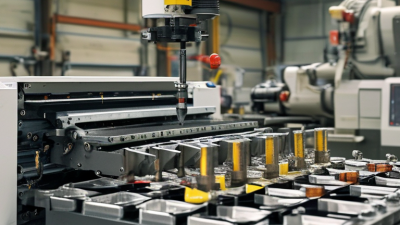
Many established suppliers support OEM production and small batch customization. Their workshops may include CNC centers, laser cutters, heat-treatment lines, and coordinate measuring machines. Buyers should ask for sample reports before approving full production. Photos are useful, but dimensional data is stronger evidence. Factory audits can reveal weak storage practices or inconsistent process control. These details affect real performance.

Reliable communication also matters. A supplier that answers technical questions precisely usually manages projects more carefully. Check export experience, packaging methods, spare-part support, and product traceability. Certifications can help, but they should match the actual equipment and market requirements. No supplier is perfect. A polished catalog may hide slow feedback or limited testing capacity. I would compare several quotations, then verify one sample independently. That extra step costs time, yet it can prevent expensive delays, mismatched parts, and difficult warranty discussions.

Product Categories and Industry Applications

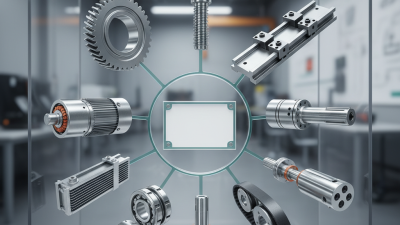
China’s machine and parts suppliers cover a wide industrial range. Common categories include CNC machining centers, turning equipment, laser cutters, injection molding machines, pumps, compressors, and automated assembly lines. Parts suppliers provide gears, bearings, hydraulic valves, linear guides, electrical cabinets, and precision shafts. Each category serves a different production need. A metal workshop may require a rigid CNC system, while a packaging plant needs fast motion control and reliable sensors.

Industry application should guide supplier selection. Automotive factories often request stamped parts, robotic fixtures, and high-volume machining. Construction equipment manufacturers need hydraulic components, welded frames, and wear-resistant parts. Food processing facilities usually prioritize stainless steel surfaces, easy cleaning, and controlled material contact. Medical equipment production demands tighter tolerances, traceable materials, and documented inspection. Agricultural machinery uses durable transmissions, cutting assemblies, and weather-resistant coatings. Specifications matter more than attractive catalog photos.

Experienced buyers should review drawings, tolerance tables, load data, and test records before ordering. Factory audits can reveal weak calibration systems or inconsistent material storage. A sample run is useful, but it cannot replace long-term quality monitoring. No supplier is perfect. Even a capable factory may struggle with unusual alloys or urgent design changes. Clear communication, staged inspections, and agreed acceptance criteria reduce that risk. Delivery performance also depends on packaging, export documents, and spare-part planning. Small details matter.

China Top 10 Machine and Parts Supplier Capability Areas

Product categories and their common industry applications for global buyers

The chart compares ten major product categories commonly supplied by China’s machinery and industrial-components sector. The application coverage score represents the number of major industries in which each category is widely used, including manufacturing, construction, agriculture, logistics, energy, food processing, automotive, and infrastructure.

Quality, Compliance, Pricing, and Global Shipping Considerations

When global buyers compare China’s top ten machine and parts suppliers, quality evidence matters more than polished websites. Ask for material certificates, dimensional reports, process photos, and recent inspection records. An experienced supplier should explain tolerances, batch control, and failure handling in plain language. Request a sample first. Small inconsistencies often appear only after assembly.

Compliance should be checked before price negotiations. Confirm applicable safety standards, labeling rules, export documents, and traceability requirements for your destination market. A supplier that answers slowly may create costly delays later. Pricing needs a full-cost comparison, not just a unit quotation. Include tooling, packaging, inspection, payment fees, spare parts, and possible rework. The cheapest quote can become expensive.

Global shipping requires practical planning. Confirm production lead time, port options, carton strength, pallet dimensions, and insurance responsibility. Ask for a shipping schedule with clear milestones. For heavy machinery, verify lifting points and container requirements before production begins. Customs descriptions should match the actual goods and documents. No supplier evaluation is perfect. I would still recheck measurements, contract terms, and packaging photos before releasing the final payment. Suppliers may make mistakes, and buyers can overlook details too. Reliable cooperation depends on written evidence, realistic schedules, and direct communication.

China Top 10 Machine and Parts Suppliers for Global Buyers

Quality, Compliance, Pricing, and Global Shipping Considerations

No. Supplier Capability Typical Product Scope Quality System & Controls Compliance Evidence to Request Indicative Price Position Common MOQ Typical Production Lead Time Global Shipping Profile Key Buyer Verification Points
01 CNC Machining Aluminum, steel, brass, and engineering-plastic precision parts ISO 9001-based production; CMM inspection; first-article inspection; material traceability ISO 9001 certificate, material certificates, inspection reports, RoHS/REACH declarations when applicable Competitive for medium and high-volume work 10–100 pieces for prototypes; 100+ for production 10–30 working days, depending on complexity and finishing Air freight for samples; sea or rail freight for production batches Dimensional capability, surface finish, tolerances, inspection method, and packaging protection
02 Sheet-Metal Fabrication Laser-cut panels, welded frames, cabinets, brackets, and enclosures Welding procedure control; coating thickness checks; bend-angle inspection; in-process sampling ISO 9001, welding qualifications where required, coating test records, material certificates Low to medium; economical for repeat orders 50–500 pieces, depending on tooling and design 15–35 working days Sea freight is usually preferred; crates may be required for welded assemblies Sheet thickness, weld quality, corrosion protection, flatness, and export packaging
03 Die Casting Aluminum and zinc housings, brackets, motor bodies, and heat sinks Alloy verification; X-ray or porosity checks; dimensional inspection; die-maintenance records ISO 9001, alloy composition reports, restricted-substance declarations, process approval samples High tooling cost; low unit cost at volume 1,000–10,000 pieces after tooling approval 30–60 working days including tooling and trial production Sea freight for production; moisture-resistant packaging is recommended Tool ownership, die life, porosity limits, alloy grade, machining allowance, and repair policy
04 Plastic Injection Molding Technical housings, covers, fittings, clips, and molded assemblies Mold-flow review; resin traceability; appearance standards; dimensional sampling; mold maintenance ISO 9001, resin certificates, RoHS/REACH documentation, flammability reports when relevant Tooling investment; favorable unit price at volume 500–5,000 pieces depending on mold economics 35–70 working days including mold development Carton or palletized sea freight; protect against deformation and moisture Mold ownership, resin grade, shrinkage allowance, color consistency, and parting-line quality
05 Gears and Power-Transmission Parts Spur gears, helical gears, shafts, sprockets, couplings, and reducers Gear-tooth measurement; hardness testing; heat-treatment records; runout and noise checks ISO 9001, steel certificates, heat-treatment reports, gear accuracy documentation Medium; precision and heat treatment drive cost 50–300 pieces for standard designs 25–55 working days Sea or rail freight; rust prevention and shaft protection are important Accuracy grade, torque rating, hardness depth, lubrication requirements, and fatigue testing
06 Industrial Pumps and Valves Process pumps, control valves, check valves, strainers, and fluid-handling assemblies Hydrostatic testing; pressure testing; material verification; coating and leakage inspection ISO 9001, pressure-test records, material certificates, applicable market conformity documents Medium; specification and metallurgy dependent 1–20 units for engineered equipment; higher for standard parts 30–75 working days Crated sea freight; oversized equipment may require project logistics Pressure class, flow curve, seal material, corrosion resistance, testing standard, and spare parts availability
07 Bearings and Linear-Motion Parts Ball bearings, roller bearings, linear guides, blocks, and precision motion components Steel cleanliness control; dimensional inspection; noise and vibration testing; grease verification ISO 9001, steel certificates, load and life data, lubricant documentation, restricted-substance declarations Competitive for standard industrial specifications 100–1,000 pieces 15–45 working days Air freight for urgent cartons; dry, sealed packaging is essential Internal clearance, load rating, precision class, noise level, grease type, and batch consistency
08 Industrial Automation Assemblies Control cabinets, electrical assemblies, sensor brackets, fixtures, and machine modules Wiring inspection; functional testing; electrical safety checks; assembly traceability ISO 9001, electrical test records, component declarations, technical files for the target market Medium to high; engineering content affects price 1–10 systems for custom projects; 20+ for repeat assemblies 30–90 working days Shock-protected air freight for small systems; crated sea freight for machines Electrical standards, software ownership, wiring diagrams, factory acceptance testing, and after-sales support
09 Construction-Equipment Components Hydraulic attachments, structural weldments, undercarriage parts, buckets, and replacement components Weld inspection; hardness testing; load testing; coating inspection; sample fit verification ISO 9001, material and welding records, load-test reports, origin documentation Low to medium for standard replacement parts 1–20 units for attachments; 50+ for small components 25–70 working days Flat-rack, container, or break-bulk shipping for oversized products Machine compatibility, steel grade, weld penetration, wear resistance, hydraulic rating, and spare-part fit
10 Agricultural-Machinery Parts Tillage parts, planting components, mower parts, castings, shafts, and wear components Hardness and wear testing; dimensional checks; coating inspection; field-sample validation ISO 9001, material certificates, coating reports, product drawings, and origin documentation Low to medium; volume and material grade are decisive 50–500 pieces for replacement parts 20–60 working days Sea freight for bulk orders; consolidated cargo suits mixed spare-part shipments Interchangeability, wear life, heat treatment, seasonal demand planning, packaging, and warranty terms
Buyer note: The lead times, MOQs, and price positions shown are practical market benchmarks for China-based manufacturing categories rather than claims about any named company. Final commercial terms depend on drawings, materials, tolerances, tooling, order volume, inspection requirements, Incoterms, destination, and applicable import regulations.
Close
Go top
Translate »