

China Top 10 Machine Manufacturers for Global Buyers
China’s machine manufacturing sector has moved far beyond low-cost production. Today, global buyers can find advanced CNC systems, packaging lines, agricultural equipment, and automated assembly solutions. Yet quality still differs between suppliers. A polished website cannot replace factory evidence.
This guide examines ten Chinese machine manufacturers serving international customers. It considers product specialization, production capacity, export experience, certifications, customization, spare-parts access, and technical support. Factory visits, sample testing, and customer references often reveal more than brochures. A reliable supplier should explain tolerances, delivery schedules, maintenance needs, and warranty limits clearly.
In the machine and machine industry, small details matter. Think of a CNC spindle running through a full shift, or a packing line stopping because one sensor fails. These moments expose engineering discipline. They also expose weak after-sales planning.
W. Edwards Deming stated, “Quality comes not from inspection, but from the improvement of the production process.” His principle remains relevant for modern machinery buyers. Strong manufacturers build quality into design, sourcing, assembly, and testing. They do not depend only on final inspection.
The ranking is practical, not absolute. A large factory may not suit a small buyer. A specialized producer may offer better support than a famous brand. Some information can change quickly, including prices, certifications, and production capacity. Buyers should verify current documents and test performance before signing contracts.
This overview aims to provide a careful starting point for supplier research. It values measurable capability over impressive claims. Mistakes are still possible, especially when public information is incomplete. That limitation deserves attention.
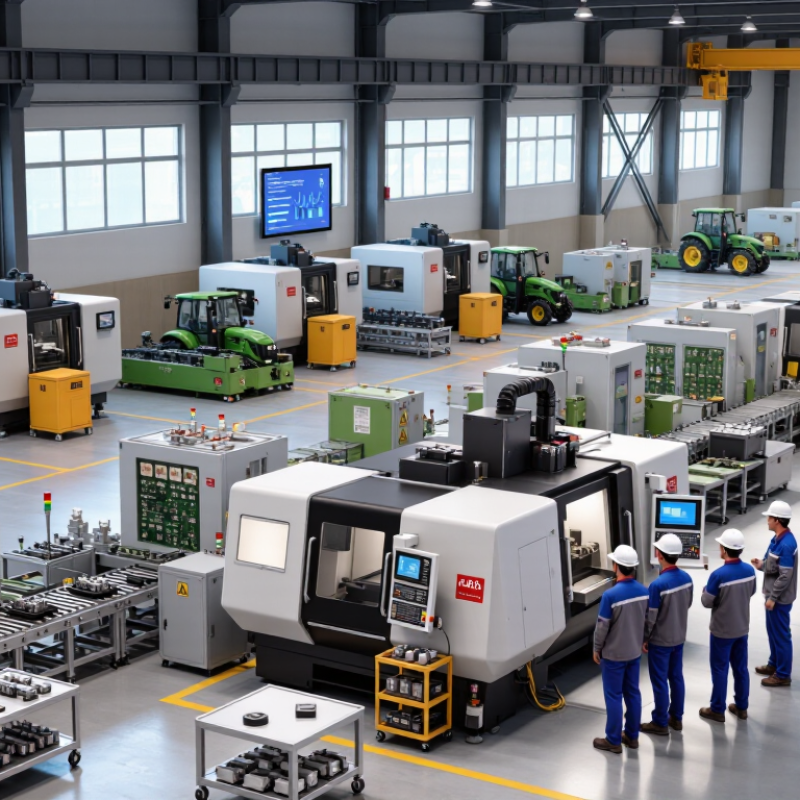
Machine Manufacturing in China: Industry Scope and Global Market Role
China’s machine manufacturing sector serves a wide range of global industries, including construction, packaging, agriculture, electronics, and metal processing. Its strength comes from dense supplier networks, skilled production teams, and practical engineering experience. Buyers can often source complete machines, replacement parts, and customized production lines within one market.
The industry is not limited to low-cost equipment. Many factories now use automated inspection, digital control systems, energy-saving motors, and improved safety testing. Exporters also support installation, operator training, and remote troubleshooting. However, quality remains uneven between manufacturers. A polished catalog does not prove stable performance. I have seen buyers focus on the purchase price and overlook spare-part access, software compatibility, or service response times. That mistake can delay production for weeks.
Tips: Request test videos, factory records, material certificates, and a clear warranty before ordering. Check whether the machine suits your voltage, workspace, output target, and local safety requirements. Ask for measurable data, such as cycle time, power use, tolerance, and maintenance intervals. An independent inspection is useful for large orders. It may add cost, but it can reveal weak welding, inconsistent components, or incomplete documentation before shipment.
China Top 10 Machine Manufacturers for Global Buyers - Machine Manufacturing in China: Industry Scope and Global Market Role
Buyer-oriented overview of China’s leading machine-manufacturing segments, production clusters, trade classifications, applications, and international sourcing considerations. The ranking refers to industrial segment relevance rather than individual companies or brands.
| Rank | Machine Manufacturing Segment | Main Chinese Production Clusters | Common HS Headings | Typical Global Buyer Applications | Global Market Role | Key Buyer Evaluation Criteria |
|---|---|---|---|---|---|---|
| 1 | CNC Machine Tools and Metalworking Equipment | Yangtze River Delta; Pearl River Delta; Shandong | 8457, 8458, 8459 | Automotive components, aerospace parts, molds, precision engineering, general metal fabrication | Very High Export Relevance China is a major global manufacturing base for turning, milling, machining-center, and forming equipment. |
Positioning accuracy, spindle performance, controller compatibility, automation integration, after-sales service, and ISO 230 test documentation |
| 2 | Construction Machinery | Jiangsu, Hunan, Shandong, Zhejiang, Anhui | 8429, 8430 | Excavation, road construction, quarrying, infrastructure projects, mining, and material handling | Very High Export Relevance Chinese production covers excavators, loaders, bulldozers, graders, rollers, and related equipment. |
Engine-emission compliance, hydraulic-system reliability, operating weight, fuel efficiency, parts availability, warranty terms, and local service capability |
| 3 | Agricultural Machinery | Shandong, Henan, Jiangsu, Zhejiang, Hebei | 8432–8437 | Land preparation, planting, harvesting, irrigation support, crop processing, and livestock operations | High Export Relevance China supplies a broad range of tractors, implements, harvesters, threshers, and agricultural processing machines. |
Regional soil and crop suitability, power take-off compatibility, spare parts, safety guards, operator training, and local agricultural regulations |
| 4 | Packaging and Filling Machinery | Jiangsu, Zhejiang, Guangdong, Shanghai | 8422 | Food and beverage, pharmaceuticals, cosmetics, chemicals, household goods, and e-commerce fulfillment | High Export Relevance China has extensive production capacity for filling, labeling, cartoning, wrapping, sealing, and end-of-line systems. |
Throughput, filling accuracy, cleanability, material compatibility, changeover time, PLC integration, and food or pharmaceutical hygiene requirements |
| 5 | Injection Molding and Plastics Processing Machinery | Zhejiang, Guangdong, Jiangsu, Fujian | 8477.10 and 8477 | Consumer products, automotive parts, medical items, electrical housings, packaging, and technical components | High Export Relevance Manufacturing includes hydraulic, electric, and hybrid injection molding systems and auxiliary equipment. |
Clamping force, injection repeatability, energy consumption, mold compatibility, controller functions, safety protection, and maintenance access |
| 6 | Textile and Garment Machinery | Jiangsu, Zhejiang, Guangdong, Fujian, Shandong | 8444–8449 | Spinning, weaving, knitting, dyeing, finishing, nonwoven production, and garment manufacturing | High Export Relevance China is an integrated supplier of textile machinery for both upstream fiber processing and downstream apparel production. |
Production speed, fabric quality, yarn compatibility, automation level, energy and water consumption, spare parts, and technical training |
| 7 | Mining, Crushing, Screening, and Mineral Processing Equipment | Henan, Shandong, Jiangsu, Zhejiang, Hunan | 8474, 8430 | Aggregates, cement, coal, metallurgy, quarrying, recycling, and mineral concentration | High Project Relevance China supplies crushers, screens, mills, feeders, separators, conveyors, and complete processing lines. |
Material hardness, capacity, wear-part life, dust control, electrical configuration, site conditions, commissioning, and lifecycle operating cost |
| 8 | Food Processing Machinery | Guangdong, Jiangsu, Zhejiang, Shandong, Henan | 8438 | Bakery, meat, seafood, dairy, grain, beverage, fruit and vegetable processing, and prepared foods | High Export Relevance China offers individual machines and integrated production lines for a wide range of food-processing applications. |
Food-contact materials, sanitary design, cleaning procedures, product yield, temperature control, line speed, documentation, and local food-safety compliance |
| 9 | Material Handling and Warehouse Equipment | Jiangsu, Zhejiang, Guangdong, Anhui, Shandong | 8427, 8428 | Warehousing, manufacturing plants, ports, distribution centers, retail logistics, and automated storage systems | High Export Relevance Production includes forklifts, conveyors, lifting systems, sorters, pallet equipment, and warehouse automation modules. |
Rated load, lifting height, duty cycle, battery or power system, control integration, floor conditions, safety functions, and operator ergonomics |
| 10 | Industrial Thermal Processing and Boiler Equipment | Jiangsu, Shandong, Zhejiang, Henan, Guangdong | 8416, 8417, 8419 | Industrial heating, drying, sterilization, chemical processing, food production, power generation, and district energy | Project-Based Export Relevance Chinese suppliers provide boilers, industrial furnaces, dryers, heat-treatment equipment, and thermal-processing systems. |
Thermal efficiency, fuel type, pressure rating, emissions, refractory materials, control systems, pressure-vessel certification, and installation requirements |
Related Posts
-
How to Choose the Right Machine and Machine Supplier?
-

How to Choose the Right Machine and Machine Setup for Your Needs?
-
How to Choose the Right Machine and Parts for Your Industrial Needs
-
10 Essential Tips for Choosing the Right Machine and Parts for Your Business
-
Top 10 Essential Machines and Parts Every Manufacturer Should Know
-
Top 10 China Machine and Parts for Global Buyers in 2026?