How to Choose the Best Knitting Machine for Your Needs?

Choosing a knitting machine begins with the fabric you want to make, not the number of buttons on the control panel. A fine-gauge machine can produce lightweight, detailed fabric, while a bulkier model handles heavier yarns. Yet gauge alone does not decide the fit. Your workspace, budget, repair access, and patience with setup all matter.

Industry context helps explain the choice. Textile Exchange’s Materials Market Report 2024 estimates that global fiber production reached 124 million tonnes in 2023, underscoring the scale and variety of materials used across textiles. Grand View Research’s knitting machinery market analysis tracks demand across machine types and applications. These reports describe a changing industry, but they cannot tell you whether a specific machine suits your projects. Check the yarn range, needle pitch, carriage feel, and availability of parts before buying. That matters.

Machine-knitting author Susan Guagliumi’s instructional work offers a useful buying principle: choose equipment around the fabric and techniques you intend to make. This is a paraphrase, not a verbatim quotation. A machine that looks capable in a product listing may still frustrate you if setup is fiddly or compatible yarns are hard to source. Try a sample swatch, if possible. The repeated phrase “knitting machine knitting machine” may appear in searches, but the real decision is more personal: will the machine reliably make the fabric you need? Expect a learning curve. Your first choice may not be perfect, and reflecting on your actual projects is part of choosing well.
How to Choose the Best Knitting Machine for Your Needs?

Define Your Knitting Goals and Expected Project Types

Start with the items you genuinely want to make: scarves, fitted sweaters, blankets, or small test pieces. Each project places different demands on a knitting machine. A scarf may need a long, uninterrupted panel, while a sweater requires shaping, multiple sizes, and careful finishing. Write down your likely project types, how often you will knit, and who will use the finished pieces. Small details matter. A child’s sweater and an oversized adult cardigan can require very different dimensions.

Consider yarn and fabric, too. The machine’s gauge and needle spacing affect which yarns work well and how dense the knitted fabric feels. Fine yarn can produce lightweight garments, while thicker yarn may suit sturdy accessories, depending on the machine’s specifications. Check the available knitting width against your widest planned piece. A machine that handles your favorite yarn but cannot fit your project may become frustrating. Swatching helps reveal this early.

Be realistic about shaping and hands-on work. Some machines support more patterning or automated functions, but setup, transferring stitches, and finishing may still take practice. If you mainly want simple rectangles, advanced features may add complexity without much benefit. If you plan to make garments, consider whether you are comfortable shaping necklines and sleeves by hand. Your first project list may change; that is normal. A small sample can expose assumptions about yarn, fit, and workload before you commit to a larger piece.

Compare Knitting Machine Types, Gauges, and Capabilities

How to Choose the Best Knitting Machine for Your Needs?

Compare Knitting Machine Types, Gauges, and Capabilities

Flatbed machines knit shaped panels, while circular machines produce continuous tubes for items such as hats and sleeves. Manual models suit hands-on work; electronic models can manage patterns and repeated stitch changes. More automation is not always better. It can mean more setup and troubleshooting.

Gauge describes needle spacing and affects which yarns and fabrics a machine can handle. Fine-gauge beds generally suit lighter yarns and detailed patterns; bulky-gauge beds leave room for thicker yarns. Check the machine’s stated yarn range, then knit a small swatch. I would not choose by gauge alone. Tension, yarn texture, and the fabric’s intended drape can change the result.

Textile Exchange’s 2024 Materials Market Report estimates that global fiber production reached 124 million metric tonnes in 2023. That figure reflects a broad materials market, not demand for any one machine type, but it underscores why fiber compatibility matters. Compare the machine’s needle bed, stitch options, and working width with the projects you actually plan to make. Need sleeves or panels? A flatbed may fit. Need tubes? Consider a circular setup. Test your own yarn, too. A specification sheet cannot show every snag or dropped stitch.

Evaluate Ease of Use, Features, and Learning Requirements

A knitting machine should feel understandable before it feels impressive. Check how needles are selected, how yarn is threaded, and whether carriage movement feels smooth. Craft Yarn Council’s published Standard Yarn Weight System divides yarn into eight categories, numbered 0 through 7. That reference helps compare yarn descriptions, but it does not guarantee machine compatibility. Confirm the machine’s gauge and recommended yarn range before buying. Try a swatch first.

Learning demands vary with setup and pattern complexity. A manual machine may require hands-on practice with cast-on, tension, and carriage handling. Electronic controls can reduce some repetitive steps, but they may add menus and pattern-setting tasks. Ask whether instructions include clear diagrams, troubleshooting, and beginner projects. Then test a basic row, a ribbed edge, and a small swatch if a demonstration is available. That matters. Notice whether you can correct a dropped stitch without restarting the whole piece. This test is imperfect: one successful swatch cannot prove that every yarn or pattern will behave well. Still, it reveals more than a feature list. Choose the machine whose learning curve fits the time you can realistically give it, not the one with the longest list of functions.

Match Machine Size, Budget, and Maintenance to Your Situation

How to Choose the Best Knitting Machine for Your Needs?

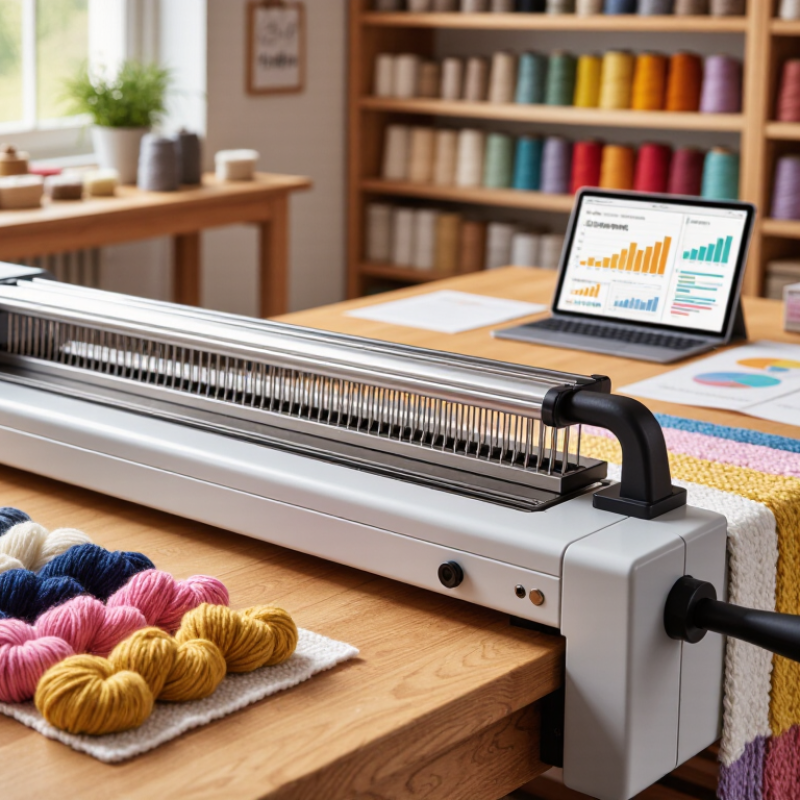
Match the machine to the fabric you actually plan to make. A narrow-bed model can suit scarves, swatches, and a small worktable; wider beds handle broader panels but need more room to operate and store. Check the machine’s gauge against your yarn: a yarn that is too thick can strain the needles or produce uneven stitches. Small is not limiting. It may simply be easier to use consistently. Budget for more than the machine itself, including extra needles, weights, tools, and possible repairs. One easy mistake is buying for an ambitious project you may never start.

Maintenance matters, too. The U.S. Bureau of Labor Statistics projects employment of industrial machinery mechanics to grow 15% from 2023 to 2033, much faster than average. This is not a forecast for home knitting-machine repairs, but it is a useful reminder that skilled servicing should not be assumed to be effortless or cheap. Before choosing, check whether replacement parts and clear maintenance instructions are available. A machine that fits your budget but sits idle after a minor fault is poor value.

Tips: Measure your table and storage space first. Ask a repair provider about common service needs and costs. If you are unsure, choose a simpler machine and keep some budget for upkeep; that choice may not feel exciting, but it can be the more practical one.

Test Your Options and Choose the Best-Fitting Machine

Treat a machine trial like a small knitting project, not a showroom demonstration. Bring the yarn you expect to use, then knit a swatch at your usual tension. Try several rows, a cast-on, and a bind-off. Notice whether the carriage moves smoothly and whether stitches drop at the edges. Small details matter. Check the machine’s gauge against your yarn; a mismatch can make even tidy fabric feel stiff or loose.

ITMF’s 2023 International Textile Machinery Shipment Statistics recorded about 25,000 large circular knitting machines shipped worldwide. Shipments fell 15% from 2022. These figures describe industrial equipment, not home-machine quality, so they are context—not a buying score.

For a personal test, compare fabric width, stitch consistency, setup time, and how easily you can correct a mistake. A neat first swatch can flatter a machine. Knit a second one, preferably after changing the tension.

Also test the practical side. Can you thread it without repeatedly checking instructions? Does it fit your table, and can you reach the controls comfortably? Record the yarn, settings, and results for each machine; memory is a poor comparison tool. If a trial is unavailable, ask for a return policy and clear setup guidance. Some preferences only emerge after an awkward session—and that is useful evidence, not a failure.

Close
Go top
Translate »