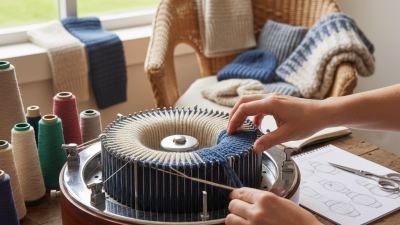
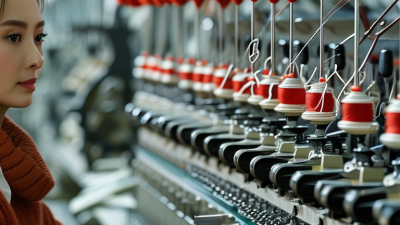
Choosing the best frame knitting machine is rarely a simple price comparison. The right choice depends on your fabric, yarn, production volume, and operators’ skill. A machine that produces delicate collars may struggle with thick, structured panels. Another model may handle industrial workloads but waste time during small-batch changes.
Textile machinery expert Dr. Norbert Klapper has emphasized a practical principle: “The machine must serve the product, not the other way around.” That idea deserves attention. A reliable frame knitting machine should match the stitch range, needle gauge, carriage speed, and yarn tension required by your actual products. Examine the needles closely. Test the carriage movement. Listen for irregular clicks. Small mechanical noises can become expensive downtime.
Do not trust specifications alone. Ask for sample knitting with your own yarn. Measure the finished panel, inspect edge stability, and record production time. Check replacement-part availability, software support, training, and service response. These details often matter more than a higher headline speed.
There is no perfect machine.
Even experienced buyers can misjudge future demand. Your first decision may need revision when orders change, staff turnover rises, or new fibers enter production. That is not failure. It is part of responsible equipment planning. A thoughtful comparison should balance present performance with future flexibility, maintenance access, energy use, and total operating cost. In the following guide, these factors will help clarify which frame knitting machine fits your workshop, factory, and long-term goals.
How to Choose the Best Frame Knitting Machine?
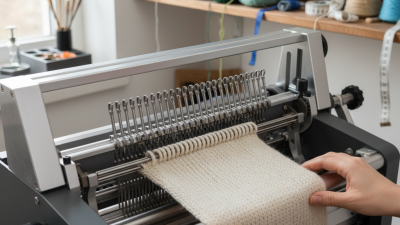
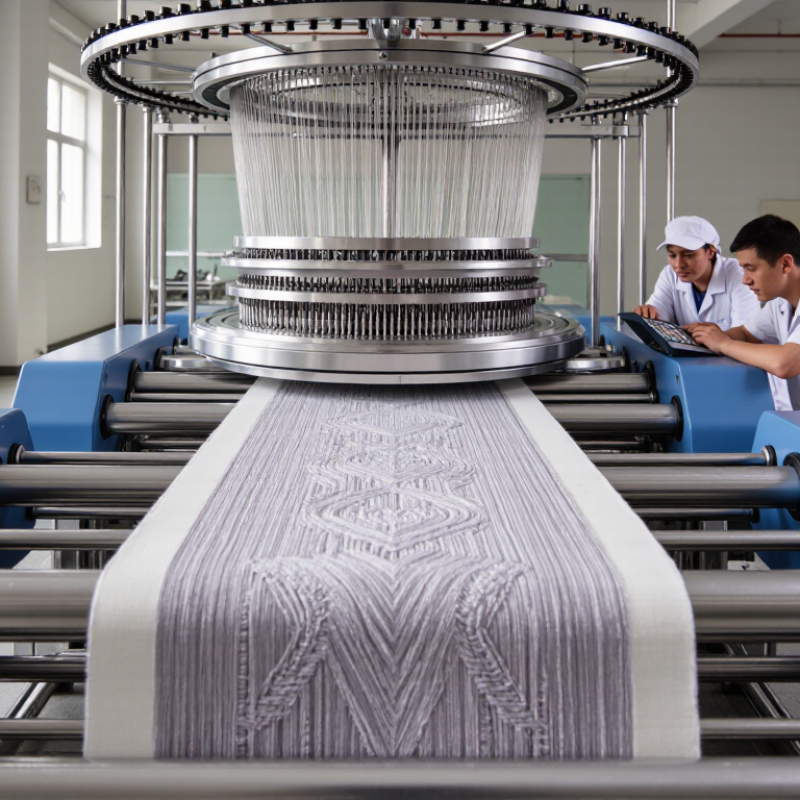
A frame knitting machine uses arranged needles to form fabric loops with controlled tension. Its frame supports the needle bed, carriage, yarn guides, and adjustment mechanisms. In practical workshops, this structure affects speed, stitch accuracy, and maintenance time. A stable frame matters more than a glossy appearance.
Flat-bed machines create shaped panels, ribbing, cables, and detailed textures. They suit sweaters, scarves, collars, and small production runs. V-bed models use two angled needle beds, allowing cleaner shaping and more flexible stitch patterns. Circular machines knit continuous tubes efficiently. They work well for hats, socks, sleeves, and seamless fabric sections. Each type solves a different production problem.
When choosing, match the machine to your fabric and workload. Check needle spacing, gauge range, carriage movement, and compatible yarn thickness. Fine gauges produce lightweight fabric, while coarse gauges handle thicker yarns. Test the machine with your actual yarn, not only the supplier’s sample. Listen for uneven carriage resistance. It can reveal alignment problems early. I have seen beginners focus on automation and overlook cleaning access. That choice often creates avoidable delays. A quieter machine is not always a better machine. Operator skill, replacement-part access, and clear maintenance instructions deserve equal attention. My own evaluations are still imperfect; a machine that performs well in testing may feel less practical after weeks of repetitive use.
Choosing the best frame knitting machine starts with your fabric, not its advertised speed. In workshop trials, record gauge, stitch structure, finished width, yarn count, and daily output. A scarf needs different control from a shaped sweater panel. Keep samples nearby. A machine handling fine merino may struggle with fuzzy recycled yarn. Textile Exchange’s Materials Market Report 2024 reports 124 million tonnes of global fiber production in 2023, with polyester representing 57 percent. That scale makes yarn compatibility a practical purchasing issue.
Test tension changes, yarn feeding, lint buildup, and needle response. Polyester may run smoothly, while blends can expose weaknesses at joins. Cotton needs stable take-down and careful density control. I once selected a narrow frame for compact sampling and underestimated the repeat size. The swatches looked clean, yet production became slow. That was my mistake. Measure the largest motif and panel before comparing specifications.
Production needs should be measured in usable hours, not brochure speed. Record setup time, pattern changes, operator training, maintenance, and rejected panels. McKinsey’s State of Fashion 2024 projected 2–4 percent fashion industry growth for 2024, supporting cautious capacity planning. Leave room for uneven orders. A small workshop may value quick changeovers more than maximum speed. Before purchasing, run a real yarn trial for several hours, then inspect the fabric under natural light. Machine choice is rarely perfect. Your testing notes matter more.
How to Choose the Best Frame Knitting Machine?
Choosing a frame knitting machine depends on more than its appearance or advertised speed. Start with practical features, such as carriage movement, needle-bed width, tension control, and pattern settings. A smooth carriage reduces hand strain during long sessions. Removable needles also make cleaning and repairs easier. Check the instruction manual before buying. Clear diagrams often reveal more than polished product photos. I once selected a machine with many settings but ignored its narrow working width. That decision looked sensible, yet it limited larger projects.
Gauge options strongly affect fabric texture and yarn choice. Fine-gauge machines create lightweight fabric with thin yarn. Medium gauges handle everyday garments and moderate yarn weights. Chunky gauges produce thicker fabric, but they may feel less flexible for detailed patterns. Gauge is not a minor specification. It changes your whole workflow. Before purchasing, knit a small swatch with your usual yarn. Measure the stitches, then compare the result with your project requirements. My first swatch was too tight, which showed that machine settings need personal testing.
Tips: Check needle spacing, carriage weight, and available accessories. Confirm that replacement needles and compatible transfer tools are easy to obtain. Bring sample yarn when testing a machine. Ask whether the machine accepts the techniques you use most. Do not assume every accessory fits every frame. That assumption can become expensive. Record your preferred tension settings after each successful swatch. The notes may seem unnecessary, but they save time later.
Comparing machine gauge options and fabric compatibility. The chart converts standard machine gauges into approximate needle counts per 10 cm, using 1 inch = 2.54 cm.
Lower gauges generally accommodate thicker yarns and produce heavier fabrics, while higher gauges support finer yarns and lighter, more detailed structures. Before choosing a machine, verify the required yarn range, fabric width, knitting technique, and compatibility with your intended production materials.
Choosing the best frame knitting machine starts with build quality, not appearance. A rigid metal frame reduces vibration during long knitting sessions. Check the carriage, needle bed, and clamps for smooth movement and secure fitting. Loose parts often create uneven stitches and frustrating repairs later.
Ease of use matters every day. Test the carriage with a small yarn sample before purchasing. It should move evenly without excessive force or rattling. Clear tension controls and readable settings help beginners avoid costly mistakes. An experienced operator should also check needle spacing, adjustment access, and the quality of the instruction manual. Good documentation signals careful engineering. Still, manuals can be incomplete.
Maintenance requirements deserve equal attention. Ask how often the machine needs cleaning, lubrication, and needle inspection. Lint collects quickly around the carriage and can affect stitch formation. Keep a soft brush nearby, and use only maintenance products approved for the mechanism. Replacement needles, screws, and other basic parts should be easy to obtain through legitimate suppliers. A machine that works beautifully but lacks service support may become an expensive shelf ornament. I once underestimated cleaning time, and performance slowly declined. That mistake changed how I compare machines. A practical model should fit your workspace, skill level, and willingness to maintain it.
| Evaluation Dimension | Manual Flat-Bed Frame | Electronic Flat-Bed Frame | Industrial Computerized Frame | What to Check Before Purchase |
|---|---|---|---|---|
| Typical Use | Learning, household projects, scarves, small garments, and sampling | Home studios, small workshops, patterned garments, and sample production | Continuous production of panels, garments, accessories, and specialized fabrics | Match the machine class to production volume, fabric types, and required pattern complexity |
| Typical Needle-Bed Width | Approximately 80–100 cm | Approximately 80–100 cm | Approximately 100–200 cm, depending on the configuration | Confirm the usable knitting width rather than the total external machine width |
| Common Gauge Options | Coarse to standard gauges, commonly around 3–8 needles per inch | Fine to standard gauges, commonly around 5–12 needles per inch | Fine, standard, and specialty gauges selected for the intended yarn and fabric | Gauge must suit yarn thickness; a finer gauge generally requires finer yarn |
| Frame and Needle-Bed Construction | Good Rigid metal needle bed is preferred; plastic accessories may wear sooner |
Very Good Stable metal bed and accurately aligned carriage support consistent knitting |
Excellent Heavy-duty frame, precision-machined bed, and reinforced carriage system |
Inspect bed flatness, needle alignment, carriage smoothness, fasteners, and surface protection |
| Carriage Movement | Good Manual operation; smoothness depends on adjustment and cleaning |
Good Manual movement with electronic pattern-control assistance |
Excellent Designed for repetitive operation and controlled carriage speed |
The carriage should move evenly without scraping, sticking, excessive play, or unusual noise |
| Pattern Capability | Basic Manual selection, tuck, slip, and color techniques |
Advanced Electronic pattern selection, colorwork, transfers, and stored designs |
Advanced Programmable patterns, production repeat control, and automated functions |
Check supported file formats, pattern memory, transfer functions, and color-changing options |
| Ease of Learning | High Simple controls and direct feedback, although technique requires practice |
Moderate More functions require training and careful setup |
Lower Operator training is normally required for programming and troubleshooting |
Review the control layout, user manual quality, training resources, and setup procedure |
| Operating Speed | Usually limited by manual carriage movement and operator technique | Suitable for low- to medium-volume work; speed depends on pattern and yarn | Designed for higher and more consistent output under controlled production conditions | Do not compare speed alone; complex patterns, yarn changes, and finishing affect actual output |
| Power Requirement | Usually no electrical power for basic knitting functions | Typically requires a standard low-voltage or mains electrical connection for controls | Requires electrical power and may need regulated air, networking, or auxiliary systems | Confirm voltage, frequency, plug type, grounding, compressed-air needs, and installation limits |
| Routine Cleaning | Remove lint and yarn debris from the needle bed and carriage after regular use | Clean the needle bed, carriage sensors, pattern-control area, and yarn path | Follow a scheduled cleaning plan for the needle bed, sensors, drives, fans, and control cabinet | Make sure cleaning points are accessible without dismantling major assemblies |
| Lubrication Requirements | Occasional lubrication of approved moving parts, following the manual | Regular lubrication of mechanical contact points; electronic areas must remain oil-free | Documented lubrication intervals for carriage rails, drives, and specified mechanical components | Use only the lubricant specified for the machine; excess oil can attract lint and damage materials |
| Common Wear Parts | Needles, sinker plates, carriage brushes, retaining wires, and yarn guides | Needles, brushes, sensors, pattern-control components, and yarn guides | Needles, sensors, belts, drive components, actuators, brushes, and control-system parts | Ask for current part availability, replacement intervals, and the cost of a basic service kit |
| Troubleshooting Difficulty | Low Most issues are visible and mechanical |
Moderate Mechanical and electronic causes may need to be checked |
High Fault codes, sensors, software, and mechanical systems may interact |
Check diagnostic functions, error-code documentation, and access to qualified technicians |
| Noise and Vibration | Generally low; increases if the carriage or needle bed is poorly adjusted | Moderate; electronic drives and carriage movement may create additional noise | Potentially higher due to motors, drives, fans, and continuous operation | Observe the machine during operation and verify that it remains stable on the intended floor |
| Build-Quality Indicators | Rigid frame, straight needle bed, durable carriage handle, and secure clamps | Accurate needle alignment, protected electronics, robust carriage, and reliable connectors | Reinforced structure, industrial bearings, protected wiring, stable drives, and service access | Prefer measurable alignment, accessible service panels, and replaceable components over appearance alone |
| Best Choice For | Users prioritizing affordability, mechanical simplicity, and hands-on control | Users needing more pattern flexibility while retaining manageable operation | Users prioritizing repeatability, productivity, automation, and long operating cycles | Choose the simplest class that satisfies the required fabric range and production target |
Balancing Price, Accessories, Support, and Long-Term Value
Choosing a frame knitting machine is less about the lowest price than daily usability. A cheap machine may seem attractive, but missing tools can increase costs quickly. During practical testing, check the carriage movement, needle alignment, and frame stability. A smooth carriage should not scrape or require force. Small defects become frustrating after several hours.
Accessories deserve careful attention. Useful items may include transfer tools, weights, cast-on combs, replacement needles, and clear instructions. Ask whether these parts are easy to purchase later.
Support also matters. Reliable sellers should provide accurate manuals, troubleshooting advice, and responsive technical assistance. That support can prevent a simple jam from becoming an expensive repair.
I once underestimated spare needles. It was a mistake.
Tips: Compare the complete package, not only the machine price. Make a simple cost list, including accessories, delivery, maintenance, and future replacements. Test a small swatch before committing to complex patterns. Listen for unusual clicks. Check whether the frame stays firm on your table. A longer warranty may suggest stronger confidence, but read its conditions carefully. Some coverage excludes ordinary wear, which is easy to overlook. Consider your learning pace, storage space, and project goals. The most advanced machine is not always the best choice. A dependable, repairable model may offer greater value over several years.