

How to Choose the Best Jersey Knitting Machine?
When choosing a jersey knitting machine, consider your fabric goals, workload, and available workspace. A model that performs well in a showroom may feel restrictive beside your cutting table. Think about jersey weight, stitch definition, production speed, and the skills available in your team.
Experienced knitters often inspect the needle bed, gauge options, carriage movement, and replacement-part access before buying. A fine-gauge machine can create smooth, lightweight jersey for fitted tops. A broader gauge may suit warmer, textured garments. Test the machine with your preferred yarn, not only the seller’s sample. Small details matter. Check its noise level, cleaning access, manual clarity, and setup effort. These factors can affect daily productivity more than impressive specifications.
Reliable decisions require practical evidence. Compare manufacturer details with independent reviews, demonstrations, and service records. If possible, speak with a technician or experienced operator who has used the same model for months. Their experience may reveal recurring jams, fragile accessories, or difficult software. I once underestimated setup time because a demonstration used an expert operator. That mistake changed my evaluation method. Now, I allow time for threading, troubleshooting, and training. No machine is perfect. The best jersey knitting machine should match your materials, output expectations, budget, and maintenance ability. Include accessories, repairs, training, and downtime in the total cost. A careful choice may feel slower initially, but it can prevent expensive frustration later.
Define the Jersey Fabric: Weight, Width, Stretch, and Gauge Requirements
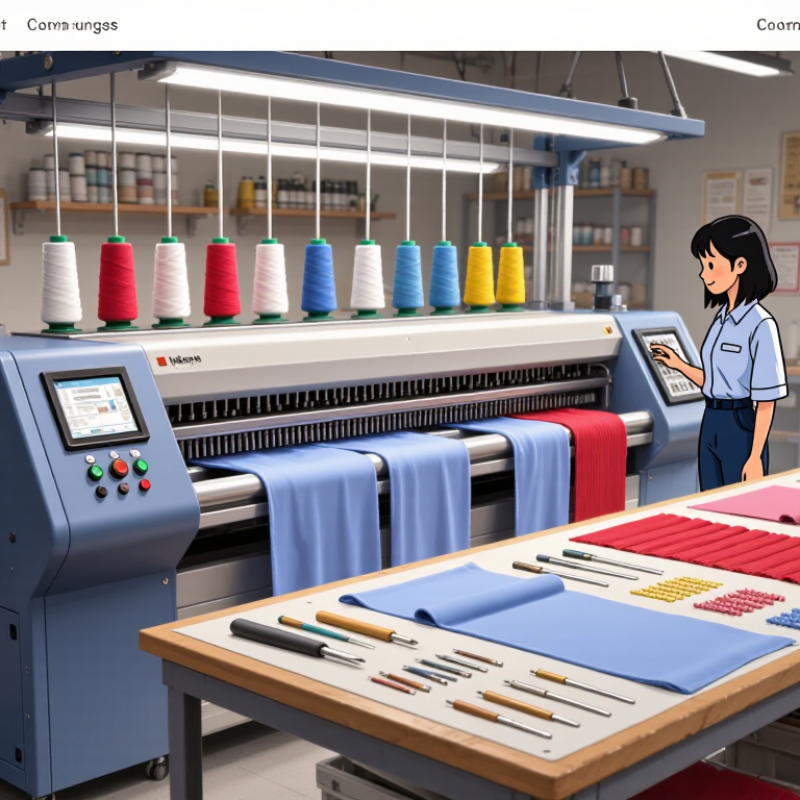
Before choosing a jersey knitting machine, define the fabric precisely. Record finished weight, usable width, stretch, recovery, and gauge. A lightweight jersey may weigh 120–160 gsm, while a denser style can exceed 220 gsm. These figures influence yarn feeding, stitch length, take-down tension, and machine stability. Measure the fabric after washing, not only directly off the machine. Small mismatch, large waste.
Width also needs a practical allowance. If the target width is 180 centimetres, calculate the expected relaxation and edge curling before selecting the cylinder size. For stretch jersey, record both crosswise and lengthwise extension. Then test recovery after 30 minutes. Elastane content alone does not predict performance. The yarn blend, stitch density, and finishing process matter equally. Textile Exchange’s 2024 Materials Market Report estimates global fiber production reached 124 million tonnes in 2023, showing why fiber selection must connect with real production planning.
Gauge is the needle count per inch. A 28-gauge machine usually supports finer constructions than an 18-gauge machine, but the correct choice depends on yarn count and desired hand feel. USDA’s 2024 Cotton: World Markets and Trade report estimates global cotton production at roughly 116 million 480-pound bales for 2024/25. That supply figure does not guarantee consistent yarn quality. Ask for yarn test results, then run a small panel using the intended settings. I have seen specifications look perfect on paper, yet the washed fabric became too narrow. Recheck everything.
How to Choose the Best Jersey Knitting Machine? - Define the Jersey Fabric: Weight, Width, Stretch, and Gauge Requirements
| Jersey Fabric Type | Typical Finished Weight | Common Finished Width | Typical Stretch | Recommended Machine Type | Typical Gauge Range | Suitable Yarn Range | Key Selection Requirements |
|---|---|---|---|---|---|---|---|
| Lightweight Single Jersey | 90–140 g/m² | 150–190 cm tubular | Width: 15–30% Length: 5–15% |
Single jersey circular knitting machine | 28–40 needles/inch | Fine cotton, viscose, polyester, or blended yarns | Use fine-gauge equipment with precise yarn feeding and stable take-down to control thin fabric appearance and curling. |
| Standard Cotton Single Jersey | 140–190 g/m² | 160–200 cm tubular | Width: 15–25% Length: 5–15% |
Single jersey circular knitting machine | 24–32 needles/inch | Cotton or cotton-blend yarns, approximately Ne 20/1–40/1 | Choose a machine with adjustable stitch density, reliable sinkers, and positive feeding for consistent GSM. |
| Heavyweight Jersey | 190–260 g/m² | 160–210 cm tubular | Width: 10–20% Length: 5–12% |
Single jersey machine with robust take-down system | 18–28 needles/inch | Coarser cotton, polyester, or blended yarns, approximately Ne 16/1–30/1 | Prioritize strong needle beds, adequate cam adjustment, and sufficient fabric take-down force for dense constructions. |
| Elastane-Containing Jersey | 160–240 g/m² | 150–190 cm tubular | Width: 30–60% Length: 15–35% |
Single jersey machine with elastane plating attachment | 24–36 needles/inch | Cotton, nylon, polyester, or viscose with covered elastane | The machine should provide accurate elastane positive feeding, controlled plating, low yarn tension variation, and compatible needle selection. |
| Polyester Sports Jersey | 120–180 g/m² | 160–200 cm tubular | Width: 15–35% Length: 10–25% |
High-speed single jersey circular knitting machine | 24–36 needles/inch | Textured polyester, microfilament polyester, or polyester-elastane yarns | Select low-friction yarn paths, stable positive feeders, suitable heat-resistant components, and effective lubrication control. |
| Rib-Knit Jersey | 180–320 g/m² | 100–180 cm tubular | Width: 40–80% Length: 10–25% |
Double jersey rib circular knitting machine | 16–28 needles/inch | Cotton, viscose, polyester, wool, or blended yarns | A double-bed configuration, synchronized cylinder and dial settings, and accurate stitch transfer control are essential. |
| Interlock Jersey | 200–320 g/m² | 150–200 cm tubular | Width: 20–40% Length: 10–20% |
Double jersey interlock circular knitting machine | 18–32 needles/inch | Fine to medium cotton, polyester, viscose, or blended yarns | Require precise dual-bed timing, balanced yarn tension, accurate stitch cams, and a take-down system designed for stable double-knit fabric. |
| Jacquard or Patterned Jersey | 160–300 g/m² | 140–200 cm tubular | Width: 15–45% Length: 8–25% |
Electronic single or double jersey jacquard machine | 18–32 needles/inch | Cotton, polyester, viscose, nylon, and blended yarns | Confirm the required feeder count, pattern capacity, needle selection system, color-change control, and software compatibility. |
| Brushed or Fleece-Back Jersey | 240–380 g/m² | 160–210 cm tubular | Width: 10–25% Length: 5–15% |
Three-thread fleece or specialized double jersey machine | 18–28 needles/inch | Medium to coarse cotton, polyester, or blended yarns | Look for compatible plating or fleece feeders, sufficient needle clearance, robust take-down, and settings that support loop-pile formation. |
Related Posts
-
What Are the Top Jersey Knitting Machine Types in 2026?
-
Why Choose a Frame Knitting Machine?
-

Best Rib Knitting Machine for Global Buyers in 2026?
-
Top Jersey Machine Options for Global Buyers Seeking Quality
-
10 Best Knitting Machine Models for Global Buyers?
-
Why Choose a Knitting Machine for Your Business?